408
408 Meta Description: What it is, how it works, and how it differs from Title
Why do some Google pages get clicks even if they rank lower than their competitors, while others languish in the search results without any traffic? Is it just the rankings or the way the snippet looks?
Meta Description: What it is and where the user sees it
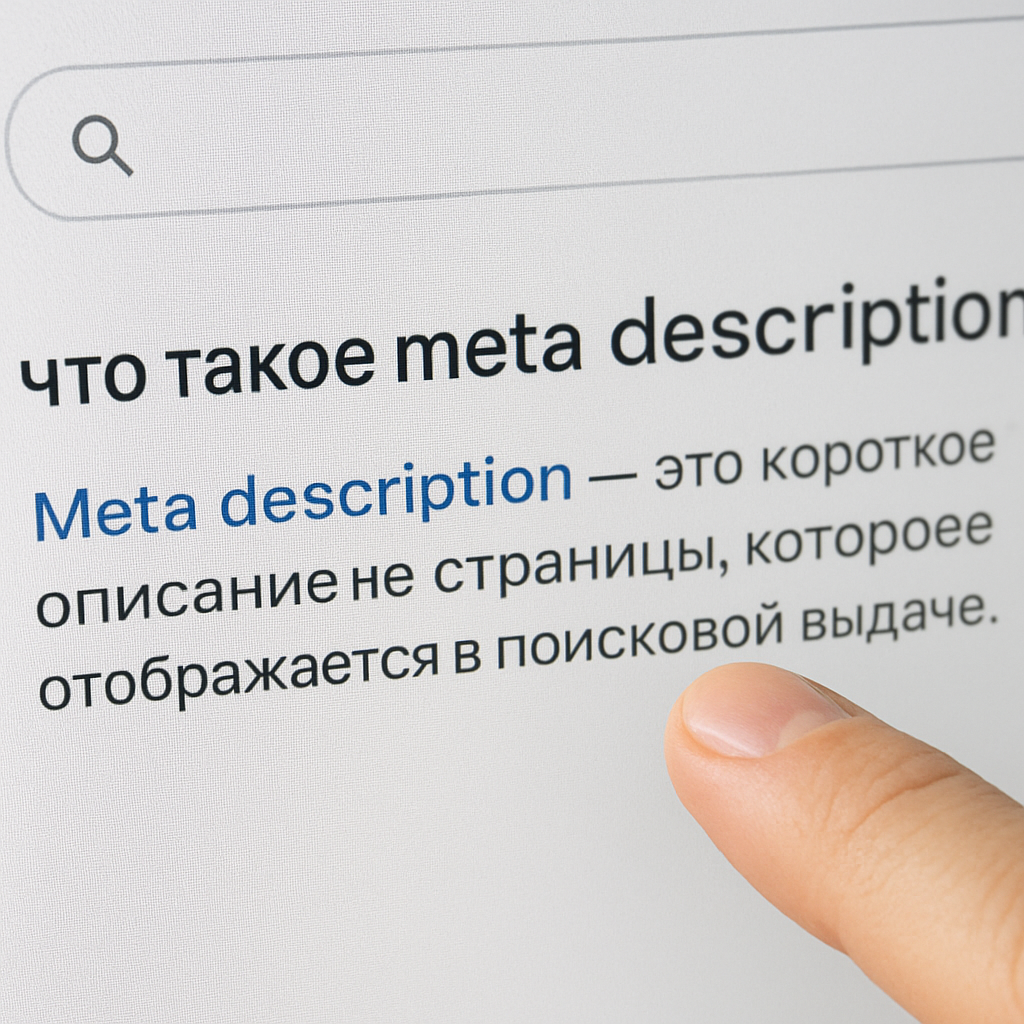
What is a meta description? It's an HTML meta tag that briefly describes the content of a page and is most often used by Google to generate snippet (description) text in search results. It can be found as What is meta name description content? — that is, the field where you enter the description text.
Important: Google may replace your text if it believes another part of the page better addresses the query. However, a well-written description still improves the snippet's manageability and helps it stand out.
What does a description do: impact on CTR and indirectly on SEO
When asked What is an SEO description?, we're usually talking about the role of descriptions in SEO. Meta descriptions aren't a direct ranking factor, but they do affect click-through rate (CTR). CTR and user behavior indirectly impact performance: more relevant clicks mean a better chance of increasing organic traffic and better SEO for your business.
- Specifies the value of the offer (delivery within Ukraine, terms, guarantee, payment).
- Increases the relevance of a snippet for a specific query.
- Increases trust and click conversion.
What are Title and Meta Description? Differences in Practice
What are Title and Meta Description?The Title is the snippet's title (clickable link) and a strong SEO signal. The Meta Description is the explanation below the title that sells clicks. For systematic website promotion in Ukraine, they work together: the Title is responsible for relevance and visibility, and the Meta Description is responsible for user choice.
| Element | Where is it displayed? | The main task |
|---|---|---|
| Title | Blue title in search results | Relevance + Key Value |
| Meta Description | Description text in the snippet | CTR + motive for conversion |
Meta Description is not "SEO magic," but a transparent tool for managing clicks and user expectations.
How to Write a Meta Description: Structure, Length, Approaches, and Examples
What to write in a meta description: structure and meaning
If you already understand What is a meta description?, the next step is to write text that actually increases CTR. In code, this looks like this: meta name description content: You provide a meaningful "announcement" of the page for the snippet.
The working structure is: 1) what this page is and who it's for, 2) the key benefit/USP, 3) specifics (prices, terms, delivery, warranty), 4) a soft call to action. Focus on the intent: informational (explain), commercial (sell), navigational (help find what you need).
Length, format, and rules for avoiding spam
A good rule of thumb is about 120–160 characters (Google sometimes shows more or less, so the meaning in the first 120 is more important). Write in a natural language, without "wallpapers" or repeated keywords: overspamming reduces readability and can reduce click-through rates.
- 1 description = 1 page: avoid duplication between categories and products.
- Add facts and figures: “delivery 1–2 days in Ukraine”, “payment by sole proprietor/cashless”.
- Don't promise the impossible and don't copy the Title: complement it.
“A good description is a mini-advertisement: specifics, benefits, trust, not a bunch of keywords.”
Examples and templates: categories, cards, services, local business
Example description meta tag for a category: "Men's Nike sneakers – genuine, sizes 40–46. Delivery within Ukraine in 1–2 days, exchanges/returns accepted. Select a model and place your order online."
For the product card: "iPhone 15 128GB – warranty, payment in installments, fast delivery in Kyiv and Ukraine. Photos, specifications, reviews – order now."
For services/local businesses: "Air conditioner repair in Dnipro: same-day diagnostics, transparent pricing, on-site technician. Schedule a convenient appointment."
FAQ: Frequently asked questions about Meta Description, Meta Keywords, and errors
Meta Description and Meta Keywords: What They Are and How They Affect
What is a meta description tag? It's a tag with a brief description of a page, most often used for search snippets. Simply put, it answers the question "What does a description do?" by helping search engines and users quickly understand the value of a page and increasing the likelihood of a click. From an SEO perspective, it's not a "ranking button," but through CTR and snippet relevance, it influences traffic efficiency.
What is Meta Keywords? This is an outdated meta tag containing a list of keywords. Google hasn't used it for ranking purposes for many years, so filling it out "for SEO" is usually pointless. In Ukrainian projects, it's sometimes left blank or disabled to save resources on maintaining the list and avoiding spam.
Why Google rewrites the description and is it necessary to make it unique?
Google may replace your text if it deems it insufficiently relevant to the query, too general, duplicated on multiple pages, or doesn't reflect the specific content. Therefore, uniqueness is essential, especially for categories, services, and key landing pages: even if the search engine sometimes rewrites the snippet, a high-quality description increases the chances of showing your version. If there are duplicates, start with priority pages: the home page, categories with high traffic, top services, and e-commerce pages for regions of Ukraine.
When auto-generating in a CMS, check your templates: the problem is often a repetitive formula without variables (for example, without the product/category/city name). Add dynamics and length limits to ensure snippets don't break off at the most important points.
How to check implementation in CMS and page code
A practical test is simple: open the page in a browser, view the source code and find a line like this: If the tag is missing, the CMS doesn't display the description or it's overwritten by a module or template. You can also use Google Search Console: in performance reports, compare pages with low CTR and improve the description selectively. Regularity is important for systematic promotion of the site: descriptions are a manageable element that's easiest to test and improve without risky changes to the site.
Conclusion: Why a website needs a Meta Description and how to implement it transparently
What a meta description is in practice: it's a manageable description of a page, which most often becomes the text of a Google snippet and directly impacts CTR. A meta description alone doesn't "boost" rankings, but it helps generate more clicks based on existing visibility, thereby supporting effective SEO and increasing organic traffic without controversial tricks. When paired with the Title, it enhances Google visibility: the Title is responsible for relevance and initial selection, while the Description provides an argument for why someone should click on your page.
A clear approach to promotion begins with implementation discipline: each priority page should have its own meaningful description that reflects the intent, unique selling proposition, and geography (relevant for Ukraine – delivery, timeframes, cities, payment methods). Next, quality control is important: the presence of the tag in the code, the absence of duplicates, readability without spam, specificity in the first lines, and consistency with the page content to avoid disappointing the user after clicking.
To integrate this into your website's promotional system, follow a "configure → test → improve" cycle: set up templates for common pages (categories/products/services), manually refine key landing pages, then measure changes in Google Search Console by CTR and clicks. If Google occasionally rewrites the description, this isn't a failure—it's a signal to improve the relevance of the text and content to queries. This approach yields predictable, measurable results and helps SEO for business work as a growth tool, rather than relying on "magic buttons."