618
618 Meta Tags in On-Page SEO: What are Meta Titles and Meta Descriptions and Why Do Search Engines Need Them?
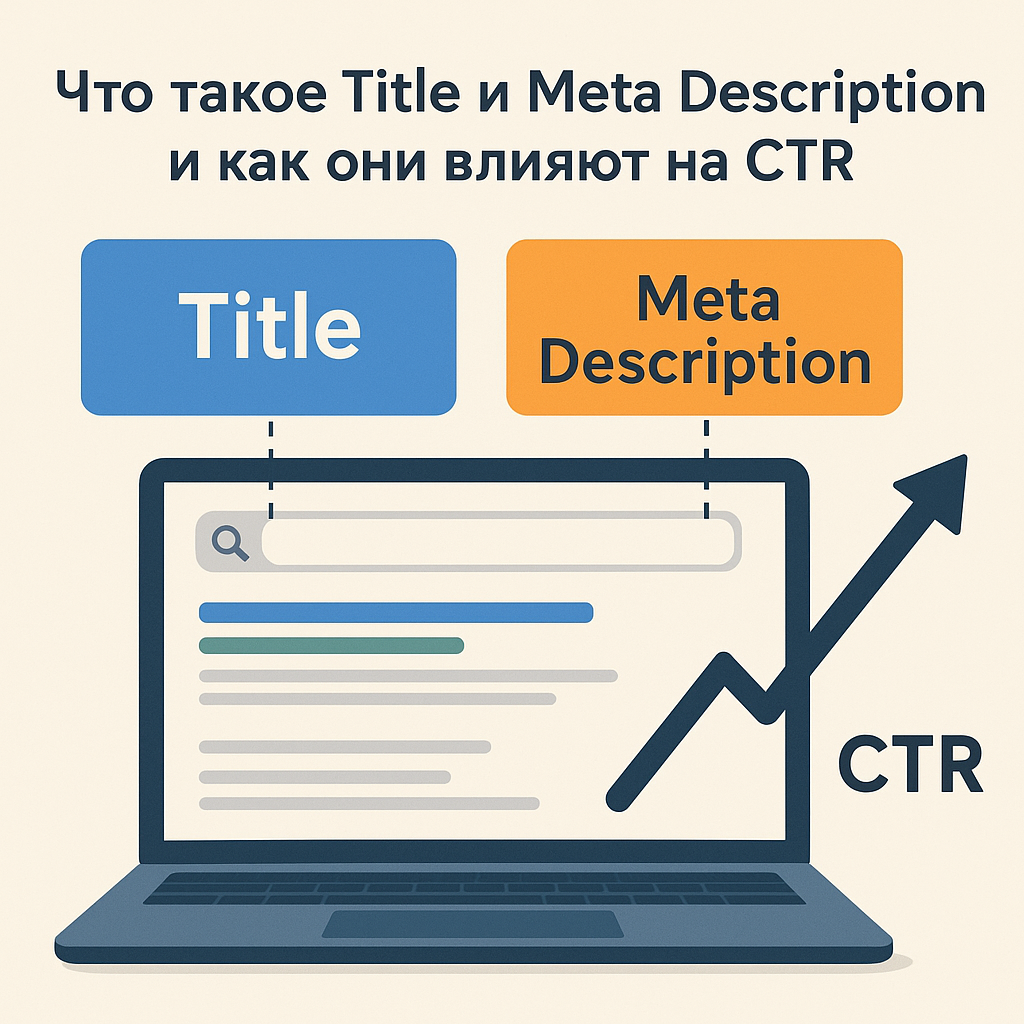
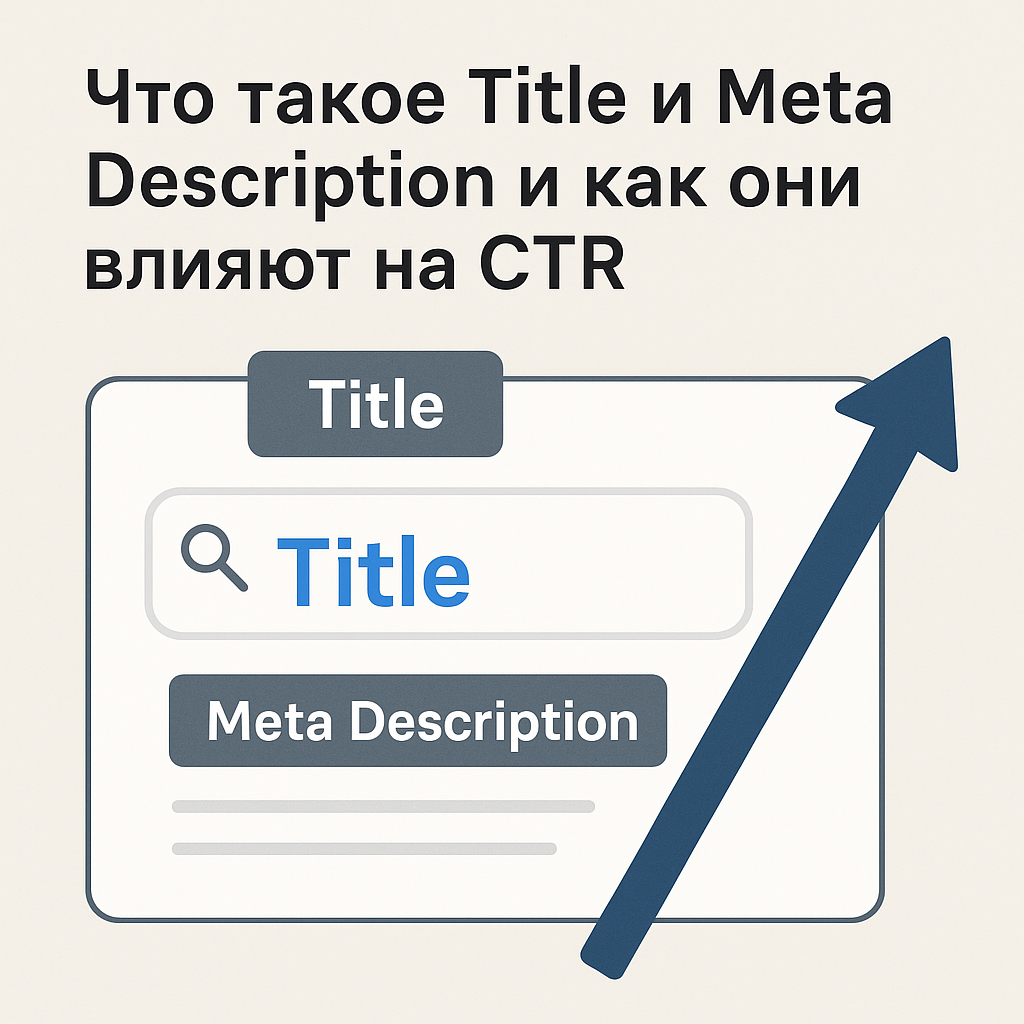
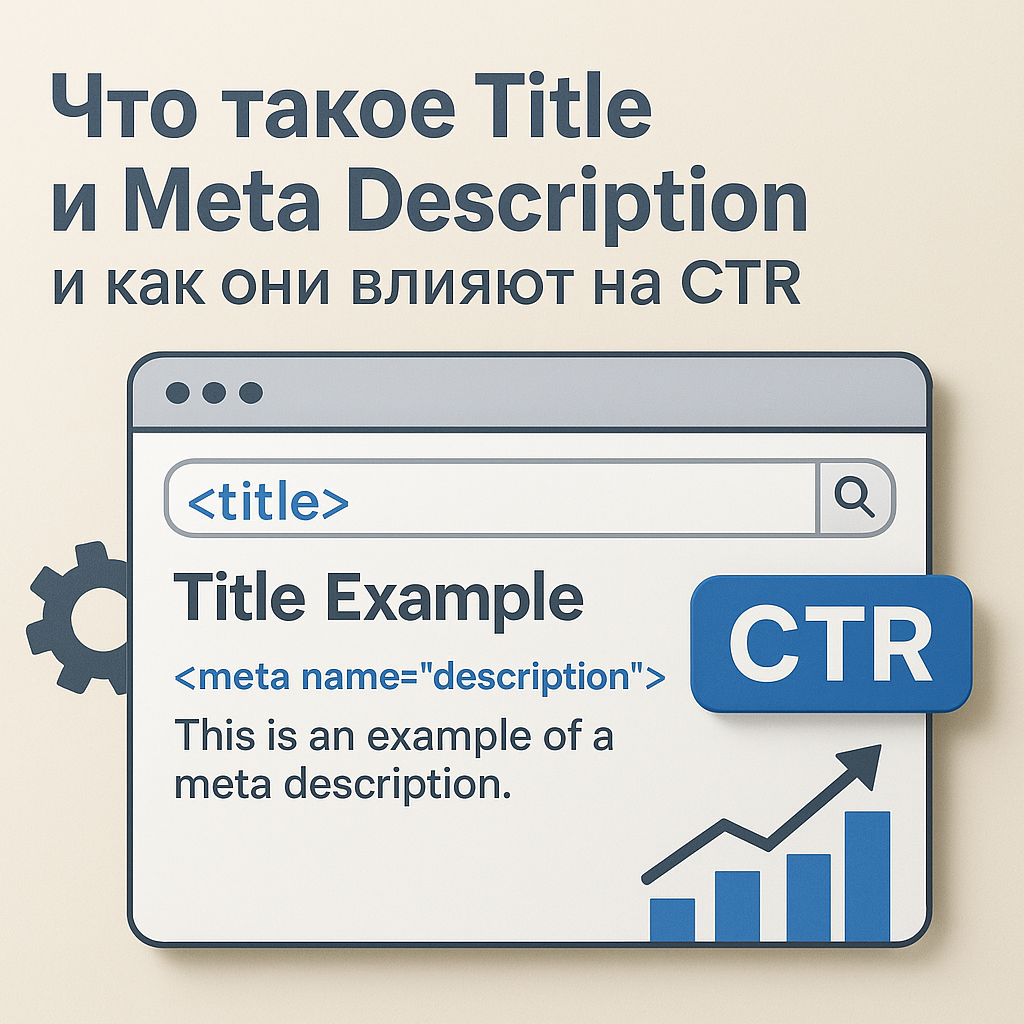
The Title and Meta Description are meta tags that form a page's snippet in Google and directly impact CTR: how often users click on your search results. If you're a business owner in Ukraine and want to get more organic leads, here you'll quickly understand what exactly to edit. On-Page SEO And why it produces measurable results. Below is a quick cheat sheet, followed by clear definitions, their role for search engines, and the relationship between title and description meta tags in real search results.
| Element | Where is it shown? | Why is it needed? | How does it affect CTR? |
|---|---|---|---|
| meta title | Search result title, browser tab | Understand the topic of the page and its relevance to the query | Determines whether I will hit the mark in 1 second |
| meta description | Description below the title (not always) | Suggest value, conditions, benefits | Increases click motivation and filters out irrelevant traffic |
Who is it suitable for?: website owners, online stores, local businesses (Kyiv/Lviv/Odesa, etc.), startups, marketers who want systematic website promotion and organic traffic growth. Who is it not suitable for?: for those looking for a "magic button" or promises of instant results without any work on the pages. For e-commerce, it's useful to break this down separately. SEO for an Online Store: How to Promote Categories, Products, and Filters in Google, because the meta tags in the catalog depend on the structure of the product range.
What is a Meta Tag: The Place of Meta Tags in On-Page SEO
Simply put, meta tags are HTML elements that help search engines and users quickly understand what a page is about and why they can trust it. In On-Page SEO, these are basic settings that you control directly: no waiting for links, no guessing at algorithms, and a transparent approach to promotion. Important: Meta tags for search engines> for search engines, these are not “magic keys” to ranking. But they do influence visibility and clickability Through snippet quality, relevance to the query, and user expectations. CTR is one of the key behavioral signals at the search results level: a high CTR alone doesn't guarantee growth, but a poor snippet almost always reduces traffic potential.
Meta title: How the meta title tag works and why it's the main one in a snippet
The meta title is the page title, which most often becomes a clickable link in Google. The meta title tag sets the main message: what exactly the user will get after clicking. For SEO, meta tags of this type are also important because they help search engines match the page with the search intent. In practice, the meta title tag should: reflect the topic, naturally include the keyword, be specific (product/service/location/terms), and be different from competitors by its meaning, not by a "set of words."
Meta description is: the role of the description tag and the combination of Title + Description for CTR
Meta description is a short description of the page, which is often included in the snippet as an explanation of “why this particular result.” Description meta tag It's not always shown verbatim: Google may replace it with a fragment of text from the page if it deems it more relevant to the query. But a well-written description tag increases the chances of getting a controlled, selling snippet.
- Title answers to “what is it about and is it right for me?”
- Description answers “What will I get, what are the conditions, why is it worth clicking?”
- In a bundle Title and description meta tags set expectations and improve the quality of clicks, not just the quantity.
A snippet is your "first touch" in Google: if it doesn't explain the value within 2-3 seconds, it won't get a click, even if it's ranked well.
Title (meta title tag / meta title tag): impact on CTR and relevance + meta title tag example
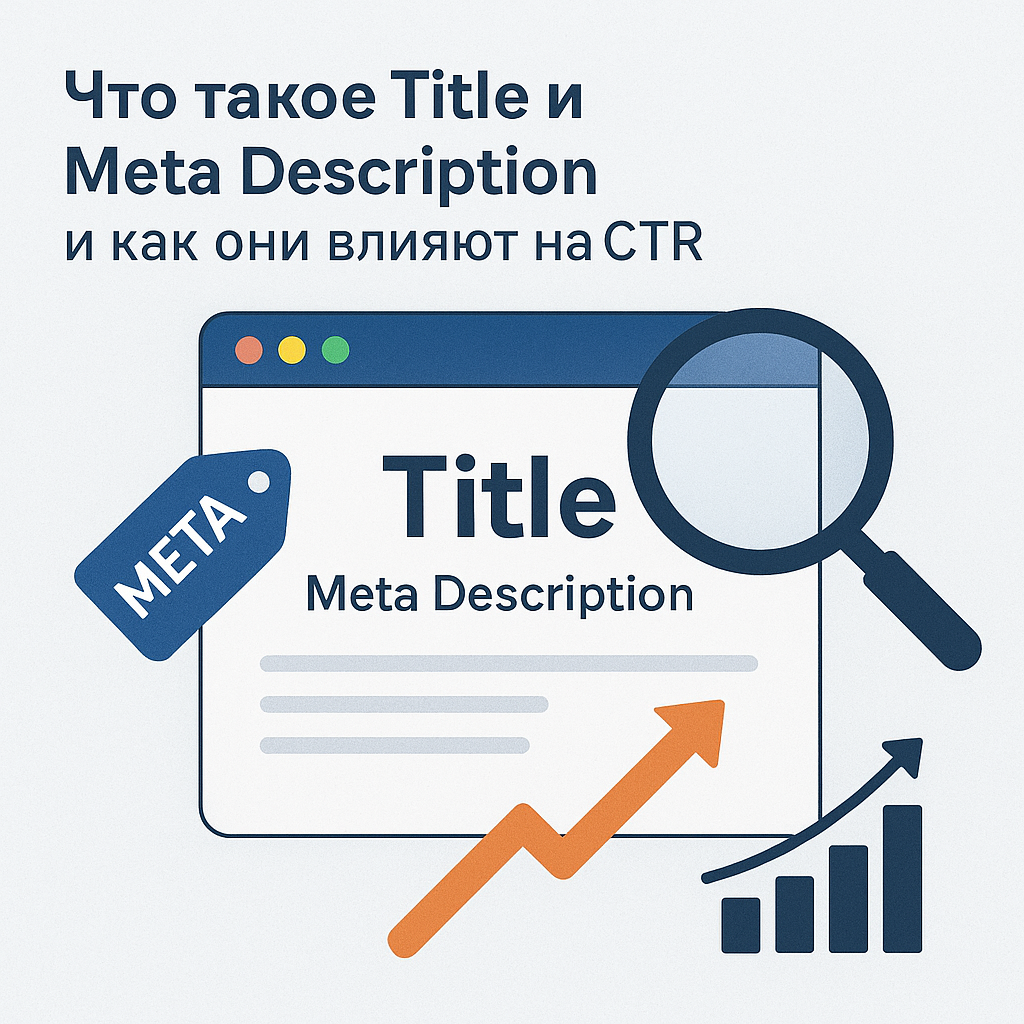
The Meta Title Tag: How a Snippet's Headline Manages Expectations and CTR
Meta title tag This is an HTML element that most often becomes the clickable title of a Google search result. Essentially, it's your "signboard" in the search results: the user sees it before they even open the site and, in a split second, decides whether to click or scroll further. Therefore, meta tags in On-Page SEO aren't a formality, but the point where the conversion from impression to click-through begins. The title influences CTR through three mechanisms: 1) relevance to the query (does the meaning match), 2) value proposition (what the user will get), 3) trust (brand, specificity, lack of fluff). If the title promises one thing, but the page delivers something else, the CTR may be normal, but behavioral metrics will deteriorate (quick bounces), and this will impact visibility stability. An important nuance: Google may rewrite the title if it deems your version unsuccessful or irrelevant. But in most cases, a strong title reduces the likelihood of rewriting because it better matches the intent and structure of the snippet.
Practical Rules: How to Write a Meta Title Tag for Business in Ukraine
Below are practical rules that help achieve a higher CTR without "magic," just through a precise message. These rules are suitable for e-commerce, services, and local SEO in Ukrainian cities.
- Start with the main meaning: key service/product + clarification (type, brand, category).
- Add a commercial trigger: price/“from…”, delivery, availability, delivery time, warranty – only if it is actually on the page.
- Consider geography: “Kyiv”, “Lviv”, “Dnipro”, “Ukraine” - when it is important for the choice.
- Keep the length within reasonable limits: a title that is too long will be truncated in search results; it is better to put the most important information at the beginning.
- Distribute the meaning across the pages: one unique title per page, no copy-paste across categories.
"A good title doesn't just contain the keyword, it explains why this result is worth opening right now."
Common Errors and Meta Title Tag Examples (1–2 Options)
The most common mistakes that eat up CTR are keyword overload ("buy buy buy"), a title that's too general ("Home"), a lack of specifics ("Company Services"), promises that aren't on the page, and duplicate titles on dozens of pages. Below is a visual example. Meta title tag example for business in Ukraine (format: what's bad and what's better).
| Page | Bad title | Best title |
|---|---|---|
| Local service | Air conditioner repair services | Air conditioning repair in Kyiv - same-day service | Service |
| Online store | Buy a smartphone at a low price | Samsung Smartphones – Prices, Warranty, and Delivery in Ukraine | Store |
These options don't "guarantee" growth, but they provide a practical basis: you formulate the offer in a way that is relevant to the request and understandable to the person. That's exactly it. meta tags become a tool for achieving results, not a tick on a checklist.
Description (meta description tag / meta description tag): how the description tag works, meta description length, and description example
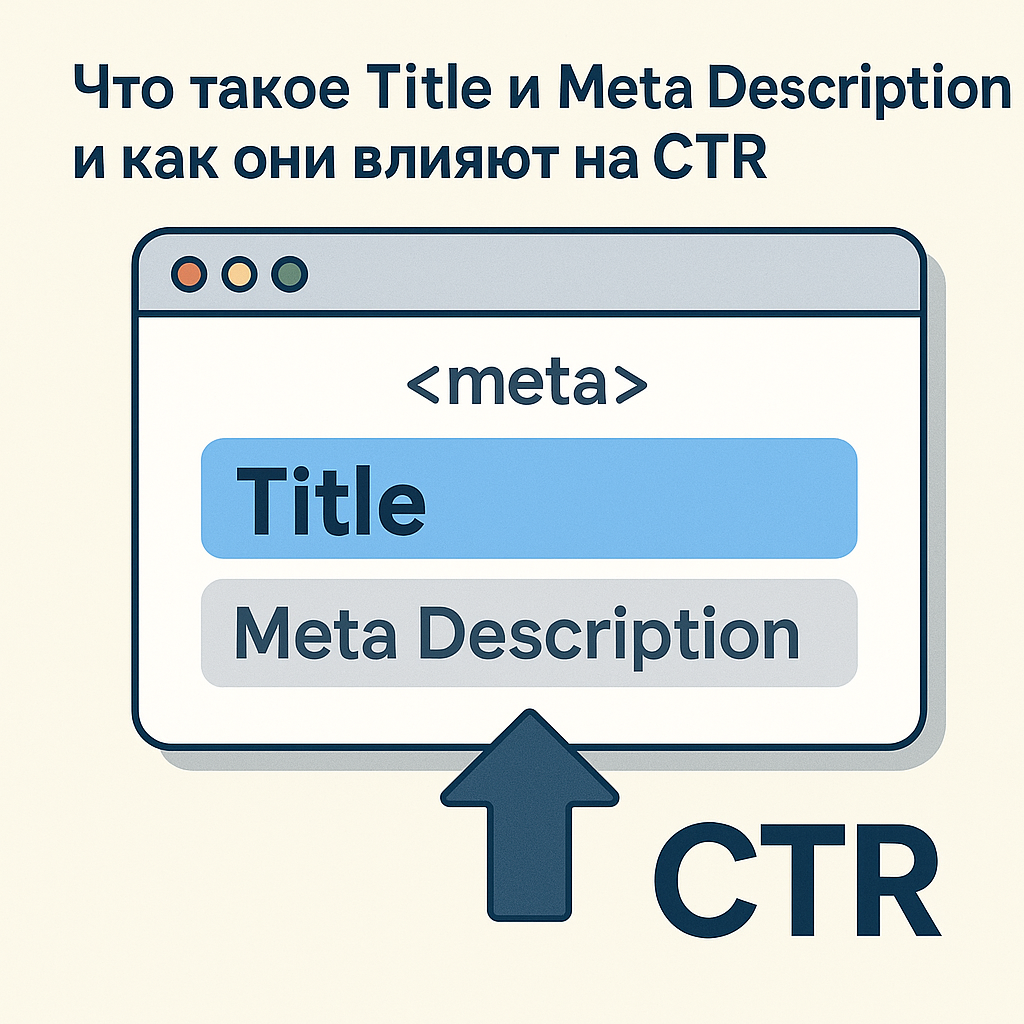
Meta Description Tag: How the Description Tag Works and Why It Affects CTR
The description meta tag is a short description of a page in HTML, which search engines often use as snippet text under the title. Unlike the Title, description meta tag While it's not usually a direct ranking factor, it does have a direct impact on CTR: it helps people understand the value of the offer, the terms, and "what happens after the click." In On-Page SEO, it's one of the fastest ways to improve click-through rate without changing the site's structure. Correct meta tags The approach here is not to "stuff" keywords, but to provide a clear answer to the query and remove objections. The more accurately the description matches the intent, the higher the chance of getting a targeted click (rather than a random click with a quick return to the search results).
When Google rewrites meta description tags and how to reduce the likelihood
Google may not show your description tag and instead generate a snippet from fragments of text on the page. This is normal and happens when the algorithm believes another piece of content better addresses a specific user query. Rewriting most often occurs when:
- the description is too general and does not reflect the specific request;
- the page has little content or it is poorly structured;
- description is duplicated on many pages (for example, in the categories of an online store);
- The text contains a lot of “water”, lists of keys or advertising cliches without facts.
A simple logic helps to reduce the likelihood of rewriting: do meta tags unique, link the description to a specific page, and add facts that are actually supported by the content (delivery within Ukraine, delivery times, product range, price "from", warranty, address/district). For large catalogs, consider SEO for online store categories: structure, text, and interlinkingto avoid duplicates in snippets and landing pages.
Meta description and description length examples for different page types
There's no exact "golden" length: the snippet length depends on the device, the query, and how Google parses the text. In practice, it's reasonable to aim for meta description length About 120–160 characters (sometimes more is possible, but the key is to keep the meaning in the first part). Make the first 8–12 words as descriptive as possible: these are the words that the user often reads. Below is an example description and meta description tag Example for different pages (for business in Ukraine):
| Page type | Meta description tag example |
|---|---|
| Service (local) | Air conditioning repair in Kyiv: diagnostics, same-day service, and a warranty on work. Find out the cost and book a technician online. |
| Online store category | Samsung smartphones in stock: current prices, official warranty, delivery across Ukraine in 1-3 days. Find a model that fits your budget. |
| Product card | iPhone 15 128GB — specifications, photos, warranty, installment payments. Delivery across Ukraine, in-store pickup available. Check stock availability. |
| Informational article | We'll explore how the Title and Meta Description influence CTR: rules, common mistakes, and examples for Ukrainian websites. A checklist for On-Page SEO. |
This structure helps to: 1) increase click-through rate, 2) bring in more targeted traffic, 3) improve visibility in Google through a clear and relevant snippet.
How Title and Description Increase CTR in Google Search Results: Click Psychology, Unique Selling Proposition, Search Intent, and Title Description SEO
Click Psychology: Why SEO Title Descriptions Work
In Google search results, users don't "read the site"—they choose between 5-10 options based on the top-level signals: title, description, URL, and extensions (prices, rating, sitelinks). Therefore, title description SEO is about snippet competition, not algorithmic magic. You either hit the searcher's intent and promise clear value, or you lose the click. The mechanics are simple: meta tags create expectation. If the expectation is precise and compelling, the CTR increases. If the title is generic and the description is "unrelated," the user won't even check your ranking because their brain saves effort and chooses the clearest option.
"CTR increases not from keywords in the Title, but from a clear answer: what is it, for whom is it beneficial, and why."
This is critical for effective SEO: you can invest in content and links but still miss out on organic traffic simply because of a weak snippet. A strong title and description directly improve your Google visibility at the click-through rate, meaning actual traffic.
Practical elements that increase CTR (intent, USP, numbers, geo, CTA)
Start with the intent: the same search query can be informational ("how to choose"), commercial ("price"), transactional ("buy"), or local ("nearby/in the city"). The title and description should reflect this intent, otherwise there won't be a click. Next comes the specifics and the unique selling proposition. In the description, it's important not to list abstract features like "quality/reliability," but to provide verifiable benefits. For businesses in Ukraine, delivery within Ukraine, lead times, warranty, availability, region/city, and payment in installments work well—if they're actually included on the page.
- Numbers: “1–3 days”, “from 999 UAH”, “24/7”, “5 years warranty” — increase trust and speed of selection.
- Geo: “Kyiv”, “Lviv”, “Odessa”, “Ukraine” - increases relevance for local queries.
- Clarification of product range/services: brand, model, type of work, segment (“for office/home”).
- Soft CTA: “Compare”, “Find out the price”, “Check availability”, “Book an appointment” - no pressure.
Important: Meta tags must match the page content. Otherwise, you'll get wasted clicks and a drop in traffic quality.
"The best snippet is the one that drives fewer random clicks but more targeted actions on the page."
How to measure the effect: what to look for in Google Search Console and how to test
Measurement is part of a website's systematic promotion. In Google Search Console, open "Performance" and compare CTR, impressions, clicks, and average position By queries/pages before and after edits. The correct approach: first, select pages with good positions (e.g., 3-10) but low CTR—these are where the potential is greatest. Test iteratively: change the Title/Description on a group of pages, record the date, wait for statistics to accumulate (usually 14-28 days, depending on traffic), and evaluate CTR changes at comparable positions. This way, you turn snippet edits into a manageable process, rather than a one-time guess.
Linking Meta Tags to H1 and Page Content: H1 Meta Tag, Duplicate Content, Cannibalization, and Meta Tags for SEO
H1 and Title Meta Tags: How They're Related and Why They Shouldn't Be Blindly Duplicated
The h1 meta tag is the main heading on the page itself that the user sees after clicking. meta title — the snippet title in the search results and the browser tab name. In On-Page SEO, these elements should be consistent in meaning, but don't have to be word for word identical. If you need to dig deeper, What is page relevance?, start with the connection between the query, Title, H1, and the actual content. Why one-to-one duplication is often worse: Title and H1 have different purposes. The Title competes in the search results and should quickly explain the value and relevance of the query; the H1 should logically introduce the content, supporting structure and readability. If you make them identical, you lose the opportunity to increase CTR (through a more “selling” Title) and simultaneously worsen UX (through an overly marketing-focused H1). The working model: same meaning – different wording. For example, you can add a geographic/USP to the Title (“in Kyiv,” “prices,” “delivery throughout Ukraine”), and leave the H1 more “clean” and content-rich (“Air conditioning repair”). This helps meta tags and content did not conflict, but rather reinforced each other.
Desyncs, duplicates, and cannibalization: where sites most often lose organic traffic
When the Title/Description promises one thing, but the H1 and above-the-fold text say something else, Google rewrites the snippet more often, and users return to the search results more often. This hurts both CTR and traffic quality—and therefore, organic traffic growth. Common problems we see on commercial websites in Ukraine:
- Duplicate Title and H1 on multiple pages (especially for online stores in filters and tag pages): it is difficult for search engines to understand which page is more important.
- Cannibalization: Two (or more) pages target the same query with identical titles and content. As a result, they "interfere" with each other, resulting in a chaotic distribution of rankings and clicks.
- H1 is too general (“Catalog”, “Services”), which makes the page look irrelevant, even if the Title is normal.
- Title spam and “creativity” in H1: the snippet looks suspicious, and the content is disorganized.
Consistency Checklist: Meta Tags for SEO and Systematic Website Promotion
To ensure that meta tags work as a systematic promotional tool for your website, check for consistency before publishing and during audits: 1) One request/intent - one landing page: we eliminate cannibalization, combine similar materials, or separate them by intent (info vs. commerce, “Kyiv” vs. “Ukraine”). 2) Title and H1 match the topic, but they differ in presentation: Title is about the choice in the search results, H1 is about the structure on the page. 3) Description is confirmed by content: any “delivery 1-3 days”, “guarantee”, “price from” should be visible on the first screen or in an obvious block. 4) Uniqueness: each page has its own Title/H1/Description (especially in categories, subcategories and product cards). 5) Checking in Search ConsoleIf Google massively rewrites titles and descriptions, it's a signal to improve the relevance and structure of your content. This way, you're not just creating one-off edits, but rather building a manageable system where snippets, titles, and content work together to boost organic traffic.
FAQ: Frequently asked questions about SEO meta tags (Title/Description), snippet rewriting, and optimization errors
Which SEO meta tags are most important and how many characters should they contain?
If we talk about meta tags in On-Page SEO, in 90% the key tasks for CTR and snippet control are Title (meta title tag) And Meta Description (description meta tag). Other elements (e.g., robots, canonical, Open Graph) are important, but they serve different purposes and don't always directly impact click-through rates in search results. Regarding length, don't aim for a "magic number," but rather for the main idea to be at the beginning and not cut off. For the title, a range of approximately 50-60 characters is usually appropriate (sometimes more or less, depending on the character width and device). For the description, approximately 120-160 characters are recommended, with the key benefit and specifics being contained in the first 1-2 sentences. In Ukraine, additional geographic clarification ("Kyiv," "Lviv," "Ukraine") works well, but only where it truly influences the choice.
"Symbols are less important than clarity: if the user understands the benefit in a second, the CTR will increase."
What to do if Google rewrites the description or title in a snippet
Rewriting is a normal practice: Google selects the fragment it believes best addresses a specific query. If Google regularly replaces your meta description, it's usually for one of three reasons: the description is too general, doesn't match the intent of the queries that trigger the page, or there's a more relevant piece of text on the page (for example, in a benefits/FAQ section) that the algorithm considers more useful. A practical tactic: check the queries for which the page is being displayed in Google Search Console and rewrite the meta description to match the most frequent and most profitable intent. Add specific information that's confirmed on the page (delivery times, delivery within Ukraine, warranty, "price from," district/city). And at the same time, improve the first few screens of content: if there's no clear answer there, Google will almost always look for fragments elsewhere and compile the snippet itself.
Emoji, CAPS, the speed of change, and uniqueness for online stores and local businesses
Emoji and CAPS in Title/Descriptions can technically sometimes be displayed, but in most niches this is a risk: it looks spammy, can reduce trust, and sometimes simply isn't shown. For a transparent approach to promotion, it's safer to use readable wording, numbers, facts, and neat separators. CAPS is acceptable in small spots (for example, abbreviations), but not as a "shoutout" in the snippet. How can I quickly see the changes? After editing meta tags, Google should recrawl the page and update the snippet. In practice, this can take anywhere from a few days to a few weeks, depending on the crawl frequency and the site's weight. You can speed up the process by submitting the URL for recrawling in Search Console, but this doesn't guarantee an immediate update. It's best to evaluate the effect of CTR after statistics have accumulated (often 2-4 weeks) and provided that the average position for keywords hasn't fluctuated too much. Is it necessary to make the page unique? meta tags For an online store? Yes, it's desirable: at least for categories, subcategories, and top product cards. Templates are acceptable, but with variables (brand/model/features/geo/conditions) and no duplicates. For local businesses in Ukraine, uniqueness is essential at the service and city/district level: one service – one purpose – one landing page, to avoid cannibalization and search engine confusion.
What to do next: A step-by-step plan for improving CTR through title and description meta tags
The Title and Meta Description aren't cosmetics, but a key CTR lever: meta tags shape the snippet, set expectations, and influence whether your result is selected in Google. Within On-Page SEO, this is one of the fastest growth points: you can improve your click-through rate today without changing your advertising budget, simply by making the snippet more accurate, clear, and useful for the user's actual search query. Next, it's important to act systematically. First, conduct a short audit: in Google Search Console, find pages with good rankings and low CTR, check for duplicate Title/Descriptions and desynchronization with the H1 and above-the-fold content. Then, rewrite meta title Under the intent (commercial, local, informational), add specifics, geo (Ukraine/city, if relevant), numbers, and a real USP. After that, tidy it up. meta description: Make it unique, verifiable content, and focused on value, not keywords. If you have an online store or a large website, implement templates for categories and product cards, but with variables and duplicate control—this is the basis for meta tags for search engines at scale. For product pages, check additionally SEO for product pages: what to write in descriptions and meta tagsTo ensure the snippet description matches the product's features and benefits. Then run testing: record the date of the changes, compare CTR, impressions, and average position in GSC after 2-4 weeks, and adjust the wording iteratively. This is a transparent approach before promotion: you don't "believe" in the edits, but measure the effect and strengthen what drives organic traffic growth.
"A strong snippet is one where the promise in the search results matches what a person sees on the page by 100%."
As a result, you gain increased visibility in Google not through grandiose promises, but through controlled click-through rates and traffic quality. For businesses in Ukraine, this directly translates into digital growth: more relevant clicks, more applications, and predictable organic traffic growth.