4150
4150 The Role of Product Pages in SEO: How They Impact Organic Traffic Growth and Sales
A product card isn't just a "price page," but one of the main SEO drivers for product cards and e-commerce sales. When designed correctly, it helps a website receive more relevant impressions in Google, attract traffic that converts, and scale organic traffic growth across the entire catalog. Below, we'll explore how a product card impacts visibility, visitor quality, and conversion—and why it's crucial without a systematic approach. SEO for an online store rests against the ceiling.
Why a product card is the core of SEO for an online store
In most online stores, it is the product cards that form the lion's share of landing pages for demand: “buy”, “price"," "delivery," "specifications," "reviews," and queries with models and part numbers. Essentially, each product card offers a unique chance to rank for low- and mid-frequency searches, where competition is often lower and purchase intent is higher. When a product card is SEO-friendly (with unique text, a clear structure, appropriate meta tags, and the presence of specifications and reviews), Google receives clear signals about the page's relevance. The result is increased visibility in Google and more predictable, systematic website promotion.
How does a card affect Google visibility and traffic quality?
A product card isn't ranked solely by its name. Search engines evaluate the completeness of the answer to the search query: is there a clear product description for SEO, are the specifications accessible, is the price clear, are there enough photos, are there reviews, and are there any duplicate titles/descriptions? The more "closed questions" a user answers, the higher the chance of getting clicks and retention.
- Growth of organic traffic by covering requests by model, parameters and properties (color, volume, material).
- Quality traffic: users come with a specific need, and not “just to look.”
- Best CTR from search results with a strong title and description that reflect the price/USP/availability.
Catalog Conversion and Scaling: Strategy, Not Chaos
A product page is the point where SEO meets sales. Even if traffic has arrived, a purchase will only happen if there's a clear structure: price, availability, delivery/payment, photos, specifications, and trust through reviews. With this approach, product page SEO isn't about rankings, but rather a practical solution for growth. For scalability, it's important to think systematically: consistent templates, uniqueness rules, duplicate control, and prioritization. Then, each new page doesn't "add chaos" but rather strengthens the overall SEO strategy for the business and the store's digital growth.

Search intent and semantics: how to select SEO queries for product cards
Intent: What exactly does the user want when searching for a product?
For SEO, what's important for product cards isn't "frequency for the sake of frequency," but rather a precise hit on the search intent. The same product may search with different intentions: buy now, compare characteristics, select a size/model, check compatibility, or check reviews. If you select queries based solely on the model name, you'll miss the demand tail, which often generates the most "warm" traffic. The rule is simple: the card should answer the query as it is formulated by a real buyer. This directly impacts the product description for SEO, meta tags (title/description), and the features section.
"SEO doesn't start with the text, but with understanding what question the user is asking."
In context SEO for an online store This means that each card is a separate landing page for a specific demand segment, and not a universal “page about everything.”
How to compile semantics for a specific product and its modifications
Collecting semantics for a card begins with the basic entity: brand + model + product type. We then expand the core through parameters (color, size, material), needs (purpose), compatibility (devices/systems), and commercial indicators (price, delivery, availability). Sources that typically yield the most useful keywords:
- Google suggestions and the “Related queries” block;
- search the catalog on your site (what users enter);
- categories/filters and characteristics (often these are ready-made query clusters);
- competitors' pages in the TOP (structure, terms, modifications).
It's important to collect not only "buy product" queries but also queries for modifications. If a product has variations (size, memory, flavor, strength), decide in advance whether these should be separate URLs or variations in a single product page. This will determine how to distribute keywords and avoid creating duplicates.
Clustering: How to Organize Keys into Card Blocks
Clustering is the distribution of queries so that each page block covers its own layer of demand: title/description — for clicking from the search results, the title and first paragraphs — for relevance, characteristics — for “parametric” queries, reviews — for trust and “reviews/review".
| Query group | Where to place |
|---|---|
| brand + model + buy/price | title, description, first screen |
| parameters (volume, color, material) | characteristics, text below them |
| compatibility/purpose | description, FAQ blocks/microtexts |
| reviews/review | reviews, snippets, structured data |
This way, you build SEO for product cards as a system: each card responds to a specific demand, and the catalog scales without chaos and cannibalization of queries.

The structure of the ideal card: what must be on the page (price, specifications, photos, reviews)
What Google “Sees” and What the Buyer “Feels”: The Basic Framework of a Card
The ideal product card is a page that simultaneously provides search engines with clear relevance signals and gives the user confidence that they're buying the right product at a clear price and with clear terms. In SEO, product card structure is just as important as the copy: if key blocks are missing or hidden, you lose both rankings and conversions. A practical guideline is this: on the first screen, the user should see the product, price, availability, and a clear CTA (buy/add to cart). Next comes proof of choice: specifications, photos, reviews, delivery/payment terms, guarantees/returns.
"A strong card is one where there are no unanswered questions on the page."
A checklist of essential items: price, availability, specifications, photos, and reviews.
Below is a set of blocks that almost always boost both SEO and sales. In context SEO for an online store It's also a way to scale the catalog according to a single standard, so that each new page automatically meets quality requirements.
- Price (current) and, if necessary, the old price/discount - this increases CTR and trust.
- Availability (in stock/on order) and deadlines - reduces refusals.
- Characteristics in a structured form (table/list): material, dimensions, volume, power, compatibility, etc.
- Photo: 4–8 high-quality images + close-ups; it is important to add relevant alt texts.
- Reviews and ratings: social proof, plus additional unique content on the page.
- Variations (color/size/memory) with clear URL logic and display of the selected modification.
This set covers key needs: understanding whether a product is suitable, ensuring the benefits and safety of the purchase, and making a quick decision.
How the structure supports systematic website promotion
When cards are created using a uniform template, you achieve "standardized" relevance: it's easier for search engines to understand pages, and for users to compare products. This is especially important for large catalogs, where SEO for product cards is built as a strategy, not chaos.
| Element | SEO effect | Effect on sales |
|---|---|---|
| Characteristics | coverage of "parametric" queries | less doubt, higher conversion |
| Photo | improvement of behavioral factors | increased confidence in the product |
| Reviews | page uniqueness, fresh content | social proof |
You can then enhance the card with meta tags, text, and micro-markup—but without a basic structure, these improvements yield fewer results.
Product Description for SEO: What to Write to Bring in Convertible Traffic
The logic of the text: not a “canvas,” but a response to choice and purchase
Product Description for SEO A product works when it helps a person make a decision and simultaneously provides Google with clear context: what the product is, who it's suitable for, how it's different, and what features are important. For SEO, this means minimal fluff, maximum meaning, and specifics instead of general phrases like "high quality" and "best choice." The optimal text structure is from the main to the specific: 2-3 sentences about the benefits and scenario, then the differences and details, and then answers to common objections. This format keeps the user on the page and reduces the risk of wasted clicks, especially in SEO for an online store, where competition for attention is high.
What to write: benefits, application scenarios, differences, overcoming objections
To ensure your text drives traffic that converts, include keywords in your description that align with real buyer questions. This helps both long-tail rankings and conversions.
- Benefit: what result does a person get (not “premium material”, but “not afraid of moisture/easy to clean/keeps its shape”).
- Scenarios: where and how to use (for home/office/travel; for beginners/pros; as a gift).
- Differences: how is this model better/different from alternatives (power, resource, equipment, compatibility).
- Objections: “will it fit…”, “how to choose the size”, “is there a guarantee”, “how to care for it”.
- Facts: specific numbers and limitations (ranges, tolerances, what is not supported).
Important: Don't duplicate the stat block word for word. The description complements them, translating the stats into benefits and applications.
Uniqueness and keywords: how to incorporate queries naturally and without duplicates
The main mistake is creating "template" descriptions where only the model changes. Google reads this as duplicates, and the user sees it as bland text. Create uniqueness through the real differences of a specific product: components, materials, installation/use details, compatibility, and comparison of modifications. Incorporate keywords organically: 1-2 main ones and several clarifying ones. For example, the SEO keyword for product cards is important for the article, while within the card, the emphasis should be on product queries (model, specifications, "buy," "price"). Ensure that keywords don't disrupt readability and aren't repeated mechanically in every sentence.
"If a keyword gets in the way of reading, it gets in the way of selling."
The result of this approach is content that drives sales: it attracts relevant traffic, holds attention, and helps people choose your product.

Meta tags Title and Description: Formulas, examples, and common errors for product pages
Why are Title and Description on a Product Page Important? CTR, Relevance, and Scale Control
For SEO for product cards meta tags title The title and description aren't a formality, but a lever for managing clicks and user expectations. The title most often becomes the title of a Google snippet and influences CTR. The description isn't a direct ranking factor, but it greatly influences click-through rate and traffic quality: users must understand that they'll land on a page with the desired product, price, and terms. SEO for an online store Meta tags are also important because the catalog is scalable: hundreds and thousands of cards. Without templates, chaos ensues—duplications, overuse, truncated titles, and a drop in CTR.
Formulas and templates: how to create a title/description for a product and modifications
A working formula for a product page: first, the exact nature of the product (type + brand + model), then the key modifier (volume/color/size/article), then the commercial emphasis (price/availability/delivery), and finally the store brand (if applicable). Length guidelines (practice, not “magic”): make the title so that the important part fits in the first 50–60 characters, and description — about 120–160 characters, so as not to lose the meaning when trimming.
| Element | Sample | Example |
|---|---|---|
| Title | [Product Type] [Brand] [Model] [Modifier] — Price/Availability | [Store] | JBL Tune 510BT Black Wireless Headphones - price, in stock | Web-Raketa |
| Description | In short: benefit + 1–2 keywords characteristics + delivery/warranty | JBL Tune 510BT Black: up to 40 hours of playtime, Bluetooth, foldable design. Fast delivery across Ukraine, warranty. |
If a product has multiple variations (color/size), ensure uniqueness: the modifier must differentiate snippets from each other. Otherwise, Google will show identical titles, and the user won't understand the difference.
Common mistakes: duplicates, overspamming, and empty promises
Meta tag errors often kill clicks, not rankings. Even with good rankings, a website gets less traffic than it could.
- Duplicates: the same title/description on different products or modifications.
- Spam: repeat “buy/price/buy” and listing the keys is meaningless.
- The title is too general.: "Buy product in the online store” - without model and differences.
- Page mismatch: V description They promise “cheap” or “in stock”, but there is no price or no stock on the card.
Focus on relevance and clarity: meta tags are about converting traffic and managed SEO for product cards at the catalog scale.
Product characteristics: how to format attributes so Google can better understand your page
Why Specs Are the "Language" You Use to Explain a Product Google
The stat block in a card is one of the most underrated tools SEO for product cardsSearch engines rank pages better when product specifications are presented clearly and structured: what model it is, what sizes, materials, compatibility, power, volume, connection type, etc. This is also critical for the user: specifications dispel doubts faster than any advertising text. In practice, it is the specifications that "pick up" long queries: "Bluetooth 5.3 headphones with microphone," "10 micron water filter," "sneakers size 42 insole length." Within SEO for an online store This means more relevant card entries and less pogosticking.
"If a parameter is important when choosing, it should be in the characteristics, and not hidden in the description."
How to format attributes: table, uniform names, and standardization of values
The optimal format is a table or structured list of "parameter → value." This format is easily scanned by both users and algorithms. The key principle is standardization: the same attribute should have the same name throughout the catalog, and the values should be in the same format. Examples of standardization:
- Units of measurement: “mm” everywhere, not “mm” somewhere, “millimeters” somewhere else.
- Ranges: “20–30W”, not “20 to 30W” on one card and “20-30W” on another.
- Colors: “Black” (or “Black”), but consistent for filters and site search.
- Compatibility: in one style (“iPhone 13/13 Pro”), without chaotic abbreviations.
| How often do they do it? | What's best for SEO and scale? |
|---|---|
| Material: Plastic | One option from the catalogue: “Material: plastic” |
| Weight: 1.2 kg | “Weight: 1.2 kg” (single separator and space) |
| Different names: “Capacity”, “Volume”, “Battery” | Single attribute: “Battery capacity, mAh” |
Which attributes to add first and how to improve relevance
Don't add just anything, but what's actually used in search and selection: brand, model/SKU, purpose, key parameters, compatibility, completeness, warranty. This helps create a complete page and increases the likelihood of rich snippets (in conjunction with structured data and reviews). Bottom line: structured, standardized characteristics make SEO for product pages manageable. You scale your catalog without creating chaos, and Google receives clear signals about which queries each product page should cover.
Photos and Media: SEO Optimization of Product Page Images
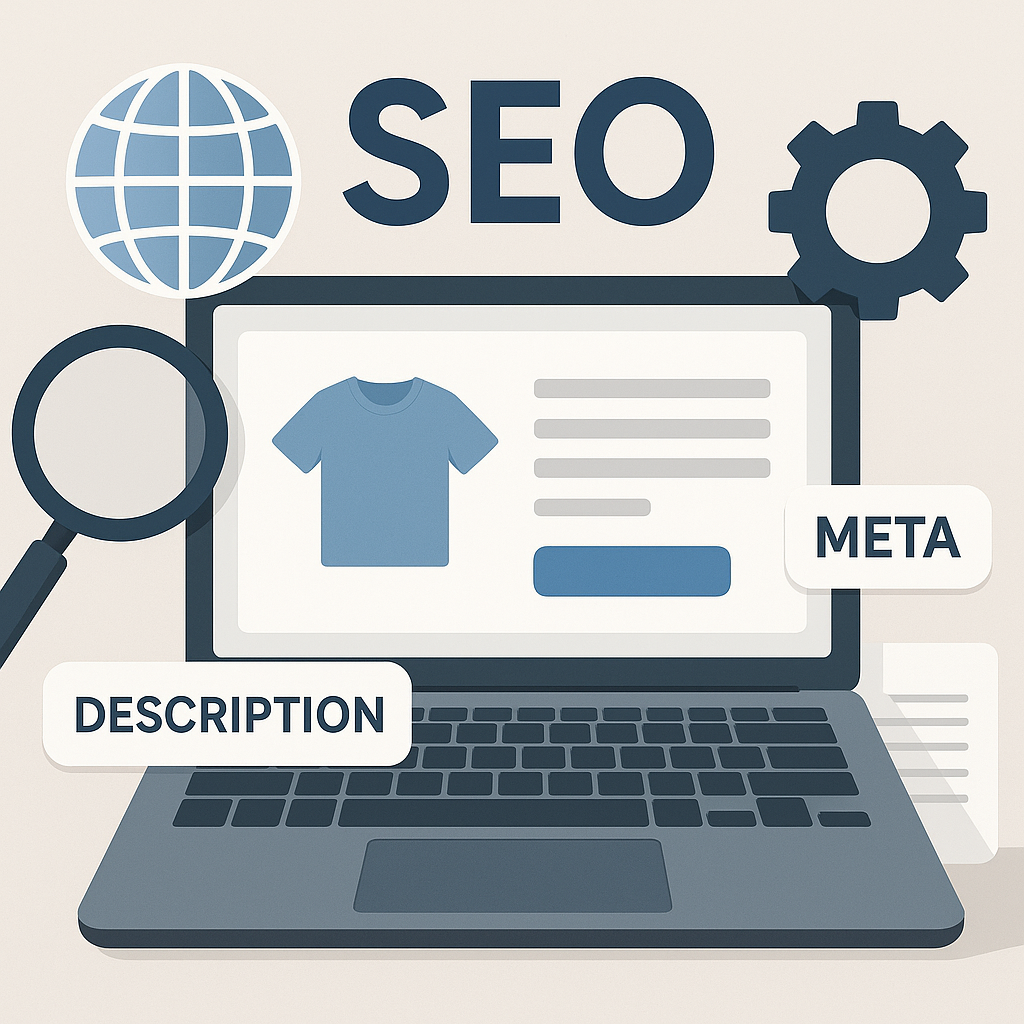
Why Optimize Photos: Impact on Visibility and Performance
In product pages, images are both a selling point and an SEO asset. Good photos increase trust, reduce doubts, and directly impact conversion. Properly optimized media helps SEO for product pages through two channels: improved loading speed (UX and Core Web Vitals) and increased visibility in Google Images, where users often come with specific purchasing intent. SEO for an online store This is especially important: the catalog is growing, and every extra second of loading time or large images scales the problem across hundreds of pages. Therefore, photo optimization is not a cosmetic step, but part of a systematic website promotion.
Technical optimization: file name, alt, format, size, and speed
Start with a base that produces predictable results and is easy to standardize.
- File names: clear and descriptive, in Latin, with hyphens. Example: jbl-tune-510bt-black-front.jpg, and not IMG_9483.jpg.
- alt: Briefly describe what's in the photo, taking into account the model and modification (color/size). Don't turn the alt key into a list of keys.
- Formats: WebP or AVIF as a priority (if the site supports it correctly), JPEG/PNG as a fallback.
- Compression: Reduce file size without noticeable loss of quality; the benchmark is "sharp enough for zoom," but without megabytes per frame.
- Dimensions: serve images under a real container (responsive), use srcset, so as not to overload desktop versions on mobile devices.
- Lazy load: for images below the fold to speed up the display of key content.
If your card contains a lot of photos and videos, make sure the "first screen" loads quickly: it influences the perception of quality and behavioral cues.
| What they do wrong | How to do it right |
|---|---|
| Same alt on all photos | alt for a specific angle: “front view,” “equipment,” “connectors” |
| They're loading PNG "just in case" | Photo — WebP/JPEG, PNG only for graphics with transparency |
| Huge 4000px sources | Multiple sizes + adaptive feed |
Unique media and content that helps sell
For competitive niches, unique photos are a strong advantage: unique angles, details, photos of use, packaging, and accessories. This reduces reliance on "identical" supplier images and builds trust. Short videos or 360° views can also be used, but only if they don't slow down the page. A good rule of thumb is that media should improve product understanding faster than it slows down the page. Bottom line: image optimization is a practical part of SEO for product pages, simultaneously improving visibility, UX, and sales at the product page level.
Reviews, Questions, and UGC Content: How to Safely Build Relevance and Trust
Why UGC Enhances Cards: Freshness, Long Tail, and Trust
ReviewsQuestions and answers are user-generated content (UGC) that helps product pages appear more "alive": new wording, real-world use cases, and clarifying details appear. This is beneficial for product page SEO in two ways: it increases relevance for long-tail queries (model + nuance), and behavioral factors are improved due to trust. SEO for an online store UGC is particularly valuable because it can be scaled across the entire catalog without constant team writing: users themselves contribute content that reflects real demand. However, there's a catch: UGC can easily degenerate into spam and junk without established moderation and duplicate protection rules.
How to implement reviews and Q&A so they boost sales and SEO
Ideally, reviews and Q&A sections should address common objections that prevent purchases: "will it fit?", "what's the size?", "what's the compatibility?", "what does it look like in person?", and "what's included." It's important that this content is accessible to search engines (not completely hidden behind authorization or loaded only after user interaction).
- Reviews: encourage specificity - rating + what you liked/didn't like + what is the usage scenario.
- Questions and Answers: Add answers from the store (expert) and mark “official answer” to increase trust.
- Filter by modifications: If the product has variations (color/size), provide the opportunity to indicate the modification in the review.
- Micro-cues: “Describe why you took it product", "Specify height/weight/size" - greatly increases the usefulness.
This is how UGC becomes content that works for sales, and not just a “comment box”.
"The best review is the one that makes the buyer's doubts disappear."
Security and Moderation: How to Avoid Spam, Duplicate Content, and SEO Issues
To prevent UGC from causing harm, implement basic hygiene: First, moderation: prohibit links, contact information, aggressive advertising, meaningless repetition, and "SEO texts" with keyword lists. Second, protection against duplicates: users often copy reviews from marketplaces or write identical phrases for different products. Such repetitions dilute the uniqueness of the page and can reduce its quality.
| Risk | What to do |
|---|---|
| Spam and links | Filters, pre-moderation, restrictions for new users |
| Duplicate identical reviews | Anti-duplicate (by text match), request for clarification, hiding duplicates |
| Tons of empty “5 stars” without text | Please add a comment, template questions for the review |
Bottom line: competent reviews and Q&A sessions are a controlled way to increase trust and relevance. With proper moderation, UGC becomes a stable source of SEO growth for product pages without unnecessary noise or risks.
Technical and structural settings: canonical, indexing, URL, breadcrumbs, interlinking
Duplicates and Variations: How to Manage Indexing Without Losing Traffic
IN SEO for an online store the technical part often decides the fate of the catalog: the same product A page can exist in dozens of URLs due to filters, sorting, UTM parameters, and variations (color/size). This is critical for SEO of product cards: Google wastes crawl budget on junk pages, and the "weight" is diluted between duplicates. A practical approach: identify the "master" version of the page (the primary URL of the card) and force all duplicates to link to it via canonical. At the same time, limit the indexing of parametric URLs that don't provide independent value. What is commonly used:
- rel=canonical to the main URL for variations, parameters and repeats;
- noindex for filter/sorting pages, if they are not SEO landing pages;
- cleaning internal links: do not “feed” the robot with links to junk parameters;
- handling UTMs and sessions so that they do not create indexable duplicates.
Important: canonical is a signal, not a command. It works best when supported by linking logic and consistent content on the main page.
URLs and Breadcrumbs: A Clear Architecture for Humans and Robots
The product card URL should be short, readable, and stable. Ideally, it should be without unnecessary parameters, transliterated, and without "catalog/catalog2." If the product name changes, try not to change the URL unless absolutely necessary; if you do, use a 301 redirect. Breadcrumbs Breadcrumbs are navigation and, at the same time, a structural signal to Google: where a product is located in the hierarchy. They help distribute internal weight and improve the user experience: the user quickly returns to the category or subcategory. It's important to separately develop these for adjacent catalog sections. SEO for online store categories: structure, texts, and interlinking help cards gain more internal weight.
| Element | What is the correct way? | Typical mistake |
|---|---|---|
| URL | /headphones/jbl/tune-510bt/ | /product?id=12345&color=black |
| Breadcrumbs | Home → Headphones → JBL → Tune 510BT | No crumbs or crumbs without category logic |
Interlinking: How to Increase Google Visibility and Distribute Content Across the Directory
Internal links are a manageable way to show Google priorities and coherence. For SEO, product pages feature sections like "Similar Products," "Customers Also Bought," "Alternatives," "Accessories," and links to brands/series/collections (if these are separate pages with high demand). Make sure your interlinking is relevant: don't tie together product with random positions for the sake of link volume. And don't forget about anchor text: "USB-C Cable 1 m" is better than "Learn More." Bottom line: canonicals, indexing, clear URLs, breadcrumbs, and well-thought-out interlinking are the foundation of systematic website promotion, without which scaling SEO becomes chaos.
Frequently Asked Questions (FAQ) on Product Page SEO
How long should a product description be for SEO?
There's no fixed "correct" length: the description should cover the intent and help people choose the product. For most product cards, 800-1500 characters without spaces (or 120-250 words) is sufficient, if product Simple. For technically complex positions where application scenarios and compatibility are important, the text can be longer—but only if it adds specificity, not fluff. In SEO, uniqueness and usefulness are more important for product cards: a short but precise description often produces a better result than long, formulaic text.
How to write Title and Description if there are thousands of products?
A large-scale catalog almost always requires templates, otherwise you'll drown in manual work and end up in chaos. A working approach: put together formulas for the title and description and insert variables (product type, brand, model, modifier, key feature, price/availability, delivery). It's important to ensure uniqueness through variables: if you have many similar products, add a distinguishing attribute (volume, color, article number, series) to the title. SEO for an online store This is a basic practice for systematic website promotion: templates provide control, and targeted manual editing results in top SKUs.
| Scenario | What to do |
|---|---|
| 100–500 products | Templates + manual editing of top sellers |
| 1000+ products | Templates 80–90% + priority optimization of categories and top SKUs |
What to do with identical products, price/availability, and reviews?
If products are essentially the same (same manufacturer, same model) but differ only in their display parameters, it's important to avoid duplicates: use one main product page and variations within it, or set the canonical to the main URL. If identical products are sold in different sections, ensure that you don't create two equal pages for the same search query—this leads to cannibalization. Price and availability must be updated correctly and visible to the user: a discrepancy between the promises in the snippet and the reality on the page undermines trust and behavioral signals. Moderate reviews: remove spam, encourage specificity, and avoid mass copy-pasting—this maintains content quality and helps SEO for product pages attract traffic that converts.
Conclusion: Strategy, Not Chaos – How to Build Effective SEO for Product Pages
The product card is the point where SEO meets sales. When you build SEO for product cards Systematically, you get not just "positions," but an increase in organic traffic that converts: precise impressions based on demand, a high CTR thanks to strong snippets, and trust through page structure, features, photos, and reviews. Conversely, chaotic duplicates, weak meta tags, and empty descriptions scale problems across the entire catalog and slow things down. SEO for an online storeTo move quickly and with control, implement changes in order of priority—from the foundation to the details:
- Bring cards to a single standard: price, availability, characteristics, photos, reviews, variations;
- Collect semantics for the intent and distribute queries into blocks (not only in the text);
- Write a useful product description for SEO without duplicates: benefits, scenarios, differences, answers to objections;
- set up title and description by formula and templates to scale the catalog without spam;
- Close technical risks: canonical/noindex for duplicates, clean URLs, breadcrumbs, relevant interlinking;
- Support UGC: review moderation and Q&A to safely enhance relevance.
Additionally, check regularly On-Page SEOHeadlines, content, internal links, and technical elements should work together. Measure results not by "feelings," but by metrics: growth in impressions and clicks (Search Console), CTR for landing pages, positions in key groups, speed and Core Web Vitals, the share of indexed pages without duplicates, conversion, and organic revenue in analytics. If you see an increase in clicks without sales, strengthen the credibility and clarity of the page.photo, characteristics, answers to questions). If there are sales but little traffic, return to semantics, meta tags, and indexing.
"Strategy, not chaos, is when every card strengthens the catalog, and the catalog strengthens the business."
Approach optimization as a process: standards, templates, prioritization of top SKUs, and regular quality control. This way, SEO for product pages becomes part of a systematic website promotion and ensures sustainable digital growth for your business.
Some of you may be looking for ways to optimize your WooCommerce store. If that's you, we covered how to promote your WordPress online store in our other article.