398
398 SERP: Definition and What It Is (in SEO and Marketing)
Why do two websites offering the same services in the same Ukrainian city receive different numbers of requests, even though both are "on Google"? The answer is often hidden in What is SERP? and what exactly the results for your query look like right now.
SERP decoding and basic definition
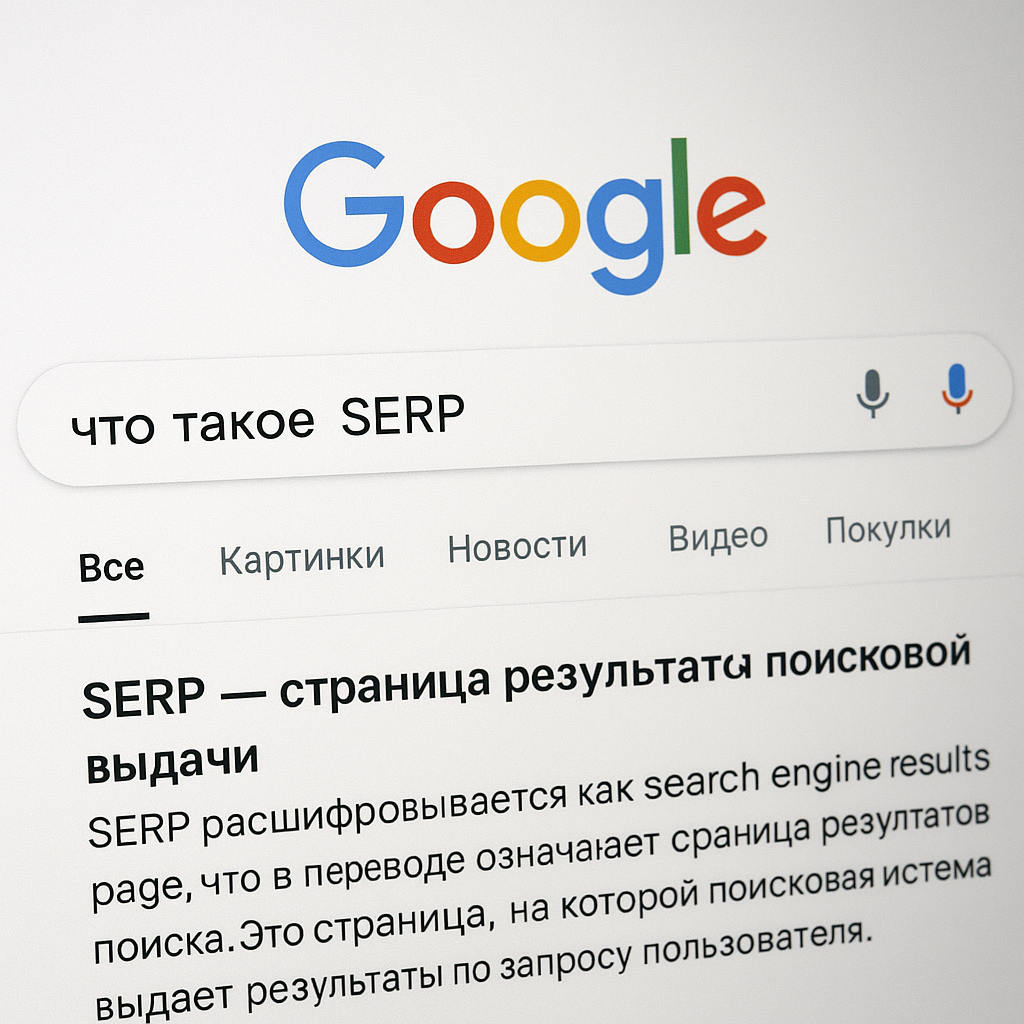
SERP stands for Search Engine Results Page. In the context of Google, it's the screen (on mobile or desktop) that a user sees after entering a query: for example, "flower delivery Lviv" or "lawyer Kyiv price."
Important: SERPs aren't just about "10 blue links." Today, search results can include maps, ads, quick answer boxes, videos, products, and other elements that directly impact clicks and conversions.
What is SERP in SEO: Practical Meaning
If we say “What is SERP in SEO?"," the SERP is a field of competition for organic traffic and visibility. An SEO specialist looks at which formats Google displays for a query and what needs to be done to achieve a higher and more visible ranking.
- which pages are ranked (categories, services, articles);
- Is there a Local Pack (cards)? This is critical for local businesses in Ukraine.
- Are there snippets, FAQs, videos, and how to get them?
What is SERP in Marketing: A Look at Demand and Money
If we consider "what is a SERP in marketing?", the SERP is a showcase of user intent and a channel for distributing demand between brands. Here, the key factors aren't the rankings themselves, but rather the click-through rate, cost of acquisition, and lead quality.
What is SERP analysis? It's a breakdown of search results to understand who's currently capturing attention (ads/organic search/maps), which offers and unique selling propositions are dominant, and where it's easier for a business to achieve effective SEO or quickly increase visibility through advertising.
A good SERP analysis shows not “how to get to the top,” but “how to get more targeted clicks under the same market conditions.”
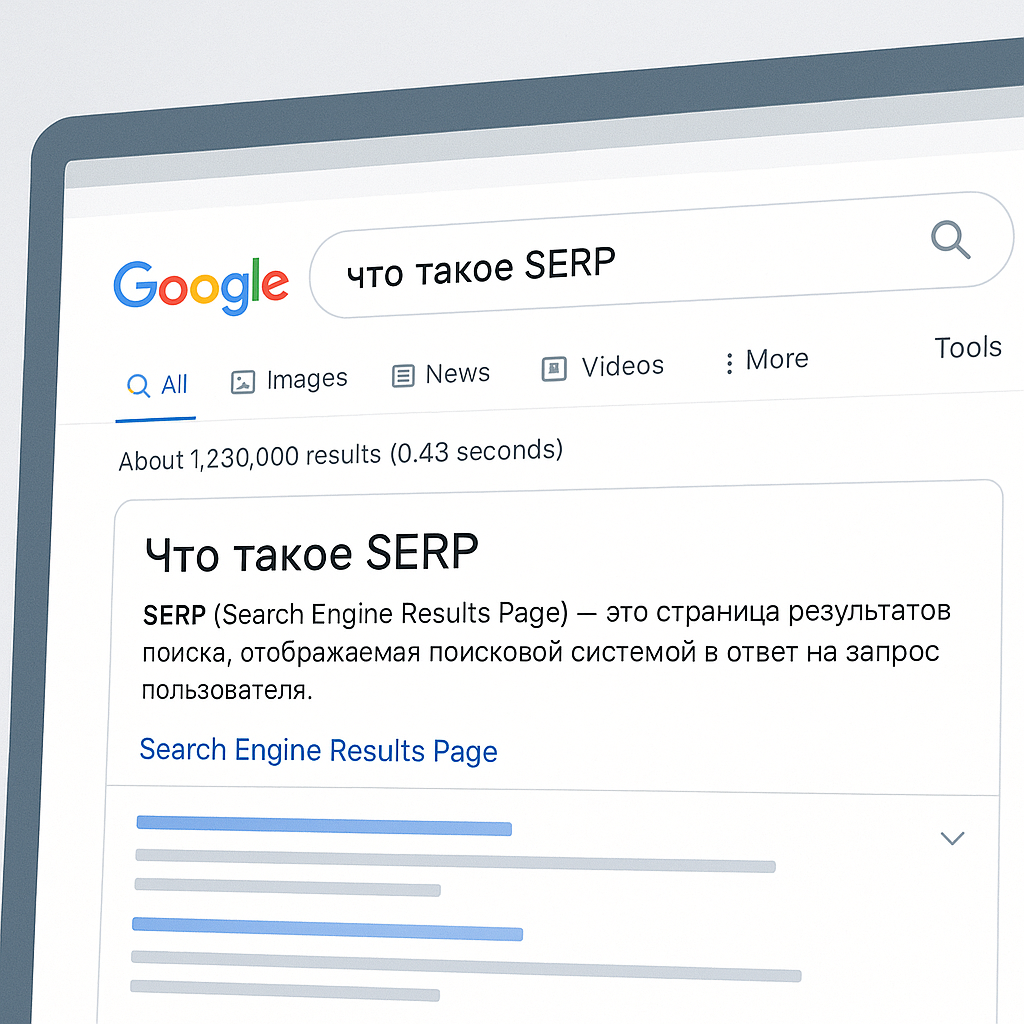
What a Google Search Results Page Looks Like: Key SERP Elements and Why They Matter
What does Google SERP consist of: what the user sees
To understand, What is SERP? In practice, imagine a typical Google search: the user receives not a "list of links," but a set of blocks competing for attention. Moreover, on mobile devices in Ukraine, some elements take up the entire first screen, and organic search results may be lower.
A typical SERP structure includes:
- Advertising units (Google Ads) - at the top and/or bottom, often with quick links and clarifications;
- Organic search results — results that are ranked by SEO algorithms;
- Advanced Elements — featured snippet, “People also ask” block, images, videos, products;
- Local results — map and list of companies (Local Pack) for geo-referenced queries.
Why SERP elements directly affect CTR and applications
Each block changes the click distribution. For example, advertising captures "hot" demand, while a featured snippet can generate a high CTR even without ranking first in organic search.
To ensure consistent promotion, a website needs to not only rank higher in organic search results but also occupy a clickable format: rich snippets, FAQ markup, videos, or local content. This accelerates Google visibility and supports organic traffic growth.
How businesses in Ukraine can use the SERP structure
A practical approach is to evaluate which blocks dominate for your keywords (Kyiv/Lviv/Odesa, etc.) and adapt your pages to them. If the search results are local, improve your Google Business Profile and reviews; if there are a lot of "question" blocks, strengthen your content and microdata.
"The right strategy is not to argue with the SERP, but to integrate into it using the format that Google is already promoting for your query."
| SERP element | How does it affect |
|---|---|
| Local Pack | Provides fast calls/routes, critical for local services |
| Featured Snippet | Increases CTR and trust, especially on mobile |
FAQ: Frequently asked questions about SERPs and search results analysis
What is SERP analysis and why is it needed?
What is SERP analysis? It's an analysis of Google's search results for a specific query: which blocks are shown (ads, maps, "People Also Ask," snippets), who's at the top, and how they get clicks. Analysis is needed to transform understanding What is SERP? Included in the action plan: which pages to create or improve, what content structure to choose, where to incorporate local promotion, and where to strengthen EEAT and link profiles. For effective SEO, this helps avoid "doing everything" and instead focus on what truly impacts visibility and CTR.
How to choose queries and what data to collect
To start, consider queries that generate revenue or leads: commercial ("buy," "price," "delivery"), local ("nearby," city names), and informational queries that overcome objections. It's worth collecting: SERP block types, competitors' positions and URLs, their page format (category/service/article), presence of microdata, snippet length and content, and locality indicators (map, ratings, addresses). If you use Search Console, add impressions/clicks/CTR data—this helps connect the search results structure to actual demand.
Why does SERP differ by city, device, and language in Ukraine?
Google personalizes search results by geolocation (Kyiv, Kharkiv, Lviv, etc.), device (mobile devices often consume the top screen with ads and maps), and language (Ukrainian/Russian). Therefore, it's important to test the same niche across multiple dimensions—otherwise, you might optimize your page for the wrong SERP.
In practice, this speeds up systematic promotion of the site: you understand where to focus on Local SEO and reviews, where to focus on content and rich snippets, and where to focus on landing pages for Ads for quick reach.
Conclusion
Understanding What is SERP? — it's about controlling how your business appears in Google when customers are ready to make a decision. The SERP isn't just a list of links: it's a combination of organic search results, ads, local blocks, snippets, and additional elements that attract attention and directly impact CTR, leads, and cost per acquisition. Therefore, effective SEO for business doesn't start with guesswork, but with seeing the actual results for your queries in Ukraine: by city, language, and device.
Analysis of search results Provides a clear approach to search results: you understand which formats Google shows in your niche and what you need to do to rank not only higher but also more prominently. This helps improve page relevance (structure, intent, snippet), choose the right landing page types, and distribute your efforts between content, local SEO, links, and advertising without unnecessary noise.
- quickly find growth points for increasing organic traffic;
- Enhance visibility with advanced features and local results;
- make decisions based on data, not on promises from the “top”.
By regularly checking the SERP and adjusting your content and pages to reflect actual results, you'll achieve sustainable digital growth for your business: a more predictable traffic flow, higher conversion rates, and a clear logic for systematically promoting your website.