

 395
395 Why bother understanding website types (and why “let’s do it like our competitor” is a bad strategy)
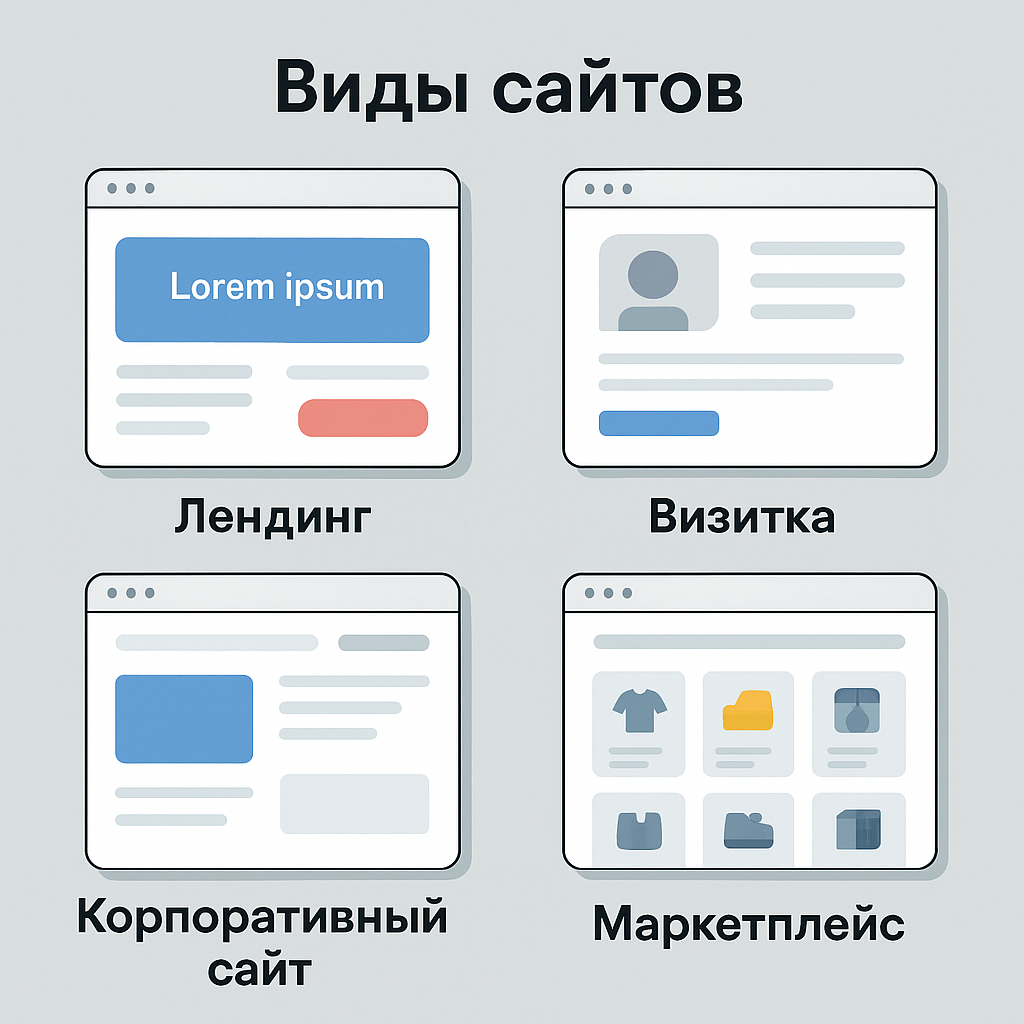
If you're a business owner in Ukraine, launching a project, or want to get more leads from your website, this article is for you. We'll now explore why understanding website types saves money, stress, and months of wasting time "redoing the header again." The rest of the article will explore formats: what a landing page is, what a business card website is, what a corporate website is, what a portal is, what a marketplace is, and, as a bonus, what an online store is. And here's my practical perspective on why you should start with strategy, not design.
| Target | Which types of websites more often suitable | The risk of doing it "like your competitor" |
|---|---|---|
| Quickly test demand | Landing | Overpaying for a "combine harvester" that won't pay for itself |
| Build trust in the company | Business card / corporate website | Mistrust due to an "empty" website without structure |
| Scale up sales | Online store/marketplace | Breaking conversion with complex logic and filters |
Fits: when you want traffic that converts and a clear growth model.
Not suitable: when the goal is “to make it look pretty” without understanding how this will bring in applications.
Why "let's do it like the competitor" usually ends with website repairs
In my practice at Web-Raketa, I often see one scenario: a business comes to me with the phrase, "We want it like X." We start asking boring (but useful) questions: Where will you get your leads—SEO, advertising, branded traffic? What's the sales cycle? Who are your clients in Ukraine: Kyiv/Lviv/Odesa or the whole country? And it turns out: the competitor has a different model, a different check, a different product, and... different promotion budgets.
Copying a website's look without copying its strategy is like buying a football club uniform and expecting the pressure to appear automatically. It won't. What will appear is extra pages, extra integrations, and extra development bills.
Choosing a website type impacts SEO, conversion, and cost of ownership.
Types of websites — this isn't a "template name," but a way to package a funnel: how a person gets to the site, what they see, what they do, and why they submit a request. This determines:
- Growth of organic traffic: The structure and semantics in SEO for business are not the same for landing pages and portals.
- Conversion: somewhere you need just one “Order” button, and somewhere - filters, comparison and a shopping cart.
- Development and support budget: a portal/marketplace is a product with constant evolution, not a “monthly website”.
Strategy, Not Chaos: Where We Start at Web-Raketa
My approach is simple: first, we define the goal (leads/sales/applications/registration), then the channel (SEO, advertising, content, link building), and only then choose the format. This is how it works. systematic website promotion and a transparent approach to promotion: you understand what you're paying for and what the numbers should change.
A good website isn't just "pretty." It's when marketing, structure, and content work like a sales department, minus the coffee breaks.
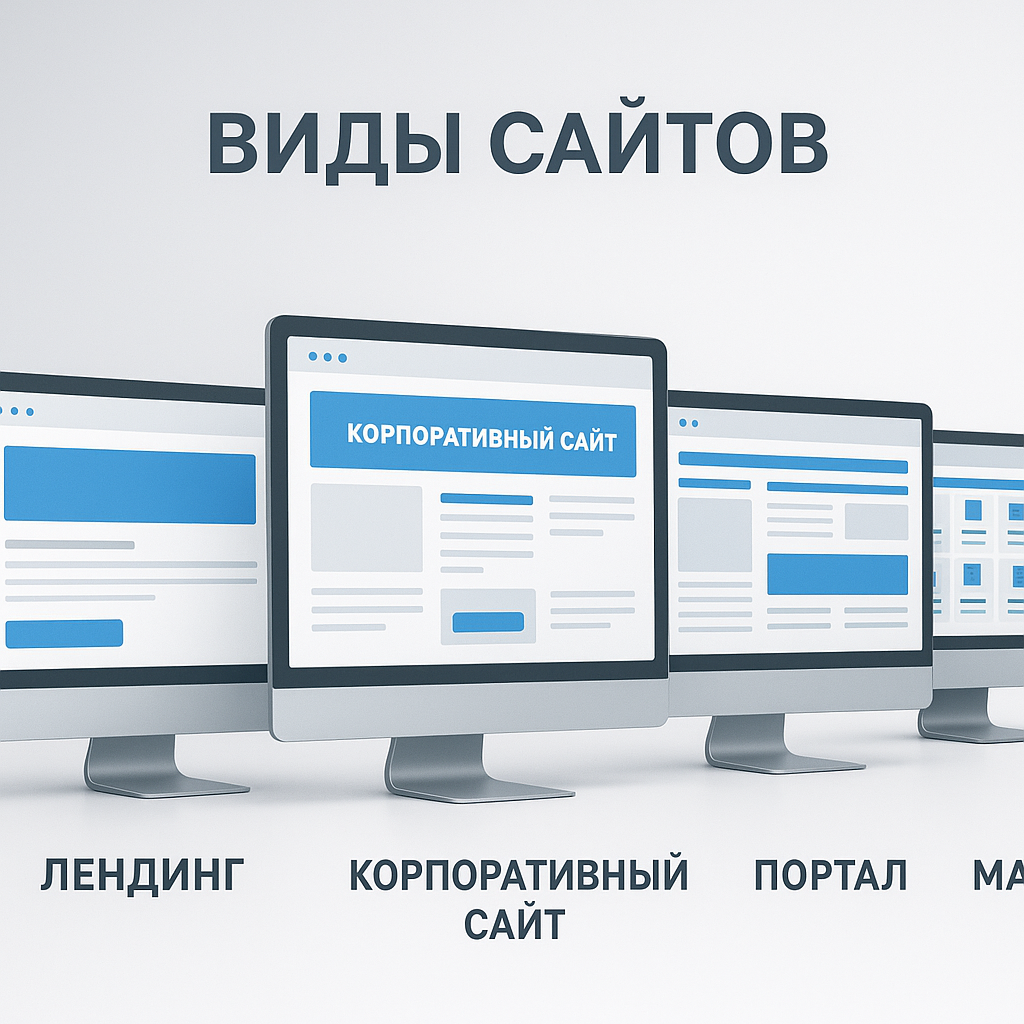
Landing: What is a landing page and when does a one-page site actually generate leads?
Landing: what is a landing page in practice, not in the dictionary?
A landing page is a single-page website designed for a single, specific action: submitting a request, signing up, purchasing, downloading, or getting a consultation. In terms of website types, a landing page is the most effective format when you need to quickly convert traffic into leads and test whether an offer is working. It's not about "building a website," but testing a hypothesis: who, for what, and why are you paying the user's attention.
I love landing pages for their honesty: if there's no demand or supply is weak, the page will show it faster than any philosophy about "brand uniqueness."
When a landing page actually generates leads (and where the traffic comes from)
A landing page's strength is conversion from paid or warm traffic. It works well when you attract people from Google Ads, Meta Ads, email newsletters, Telegram/Instagram, and partner placements. Typical tasks:
- lead generation for a service (repair, delivery, consultations, b2b applications);
- testing a new offer/niche in Ukraine without a budget "like for a corporate portal";
- launch of a promotion/event/pre-order;
- collecting applications in a specific city (local geography + clear CTA).
Rule of thumb: If you have one product/service and one main scenario, a landing page will likely be the "traffic that converts" faster than other formats.
Where Landing Pages Fail: SEO and Scaling Without Chaos
A landing page's weak point is organic traffic growth. In SEO, you typically need structure: separate landing pages for specific queries, a blog/content section, sections for services, case studies, and FAQs. It's difficult to cover semantics and improve Google visibility on a single page without compromise: you'll either overload the page or you won't rank.
If you're planning systematic website promotion, product line expansion, or multiple service lines or regions, a landing page is often the first step, followed by a logical move to a corporate website or online store. And that's okay: a landing page is a tool for speed, not a timeless architecture.
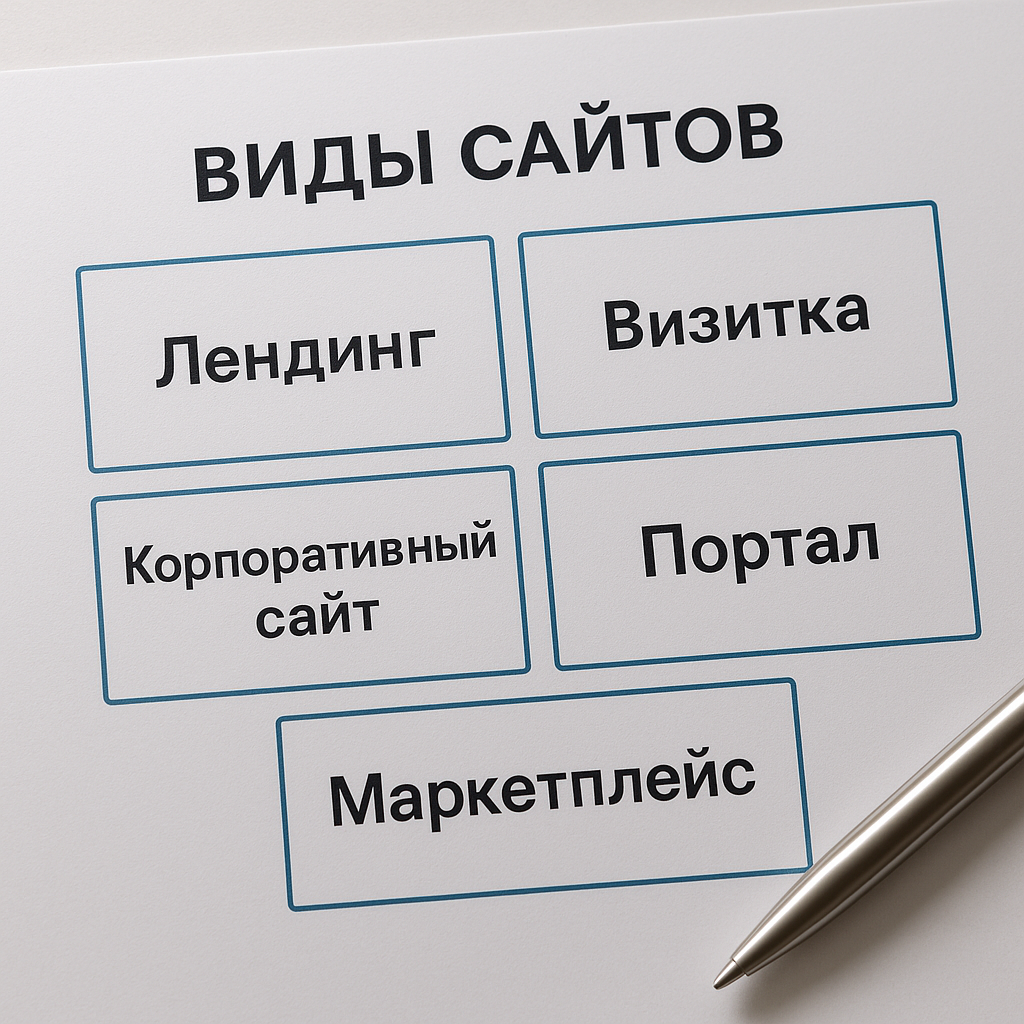
Business card website: what is a business card website, and why does it often turn into a "digital sign without people"?
What is a business card website: when "just being online" is already a task
A business card website is a compact site that answers basic questions about your company: who you are, what you do, where you are, how to contact you, and why you can be trusted. Among the website types, a business card is a format for a discreet brand presence: so people can find you by name, so they can easily find your contact information, and so customers don't get the feeling "do they even exist?"
But in reality, a business card often turns into a "digital sign without people": there's a design, but no leads. And it's not magic—the website simply isn't integrated into the funnel.
“A business card without meaning is like a sign on a street where no one goes.”
The minimum set of pages and what needs to be there for a website to work
A good business card doesn't have to be small; it must be clear. The minimum set usually includes the following: main page (offer), services/services, about the company, contact information, and privacy policy. Case studies/portfolios and testimonials are often included—this has a real impact on conversion, especially for services in Ukraine (repairs, medicine, B2B, local services).
Typical errors we see regularly at Web-Raketa:
- contacts are hidden so deep, as if you are embarrassed by them;
- instead of an offer - “We are a team of professionals” (and that’s it);
- there are no specifics regarding geography and conditions (city, districts, timeframes);
- Forms without a purpose: “Submit a request” – for what exactly?
In short: a business card shouldn't "tell about a brand," but rather help a person make a quick decision.
How to prepare a business card for increased Google visibility and basic, effective SEO
Even a simple website can be the foundation for results if you think strategically, not haphazardly. For basic SEO, the following are important: correct titles and meta tags, a clear URL structure, Organization/LocalBusiness microdata, a fast mobile site, and internal linking between services and contacts.
Practical tip: instead of a single "Services" page, create 3-7 short landing pages for key destinations and cities. This creates entry points from search and helps grow organic traffic without turning your business card into a portal. And yes, content that drives sales can be concise—as long as it answers real customer questions.
Corporate website: what is a corporate website and how does it drive sales through content and trust?
What is a corporate website: not just "many pages," but a sales and trust system
A corporate website is a format from the list of website types that functions as a company's digital office: it explains services, demonstrates expertise, collects requests, and helps close deals. Unlike a business card, it doesn't just "appear" but guides the user through a logical process: request → solution → evidence → action.
In practice, Web-Raketa's corporate advertising campaign becomes a key asset when a business needs not a one-time surge in leads, but a sustainable increase in organic traffic and increased visibility in Google. This is especially important in competitive niches in Ukraine, where advertising is becoming more expensive and "converting traffic" requires systematic cultivation.
"A corporate website isn't a storefront. It's a sales department that works 24/7 and doesn't ask for overtime bonuses."
What should it consist of so that the content works for sales?
A strong corporate website isn't just a matter of "we'll add a blog someday." It's a pre-built structure tailored to demand and conversion: services/areas, landing pages for keywords, case studies, a trust block, a blog/knowledge base, lead magnets, and clear CTAs. Ideally, all of this is linked by internal logic and analytics.
What usually brings results the fastest:
- service pages with specifics (timeframes, stages, price/range, who is suitable/not suitable);
- cases with numbers and process (before/after, what was done, what was the result);
- content that works for sales: answers to objections, comparisons, checklists;
- Lead magnets (brief, calculator, audit, guide) for a specific segment.
Humor from life: if your "case" looks like "we made a website, the client is happy" - it's not a case, it's a compliment to yourself.
When a corporate event is better than a landing page and business card for SEO
If you offer multiple services, serve different client segments, have a long sales cycle, or want systematic website promotion, the corporate format is a winner. It allows you to scale semantics (many queries → many landing pages), build trust through expertise, and generate demand at various stages.
An important point: a corporate website requires a transparent approach to promotion—strategy, content plan, metrics (leads, CPL, conversion), regular improvements, and careful link building without unnecessary fuss. Then, it becomes not an expense, but an asset that, over time, brings in customers more cheaply than advertising.
"SEO loves structure. And structure loves discipline—otherwise, it'll just be a blog for the sake of it."
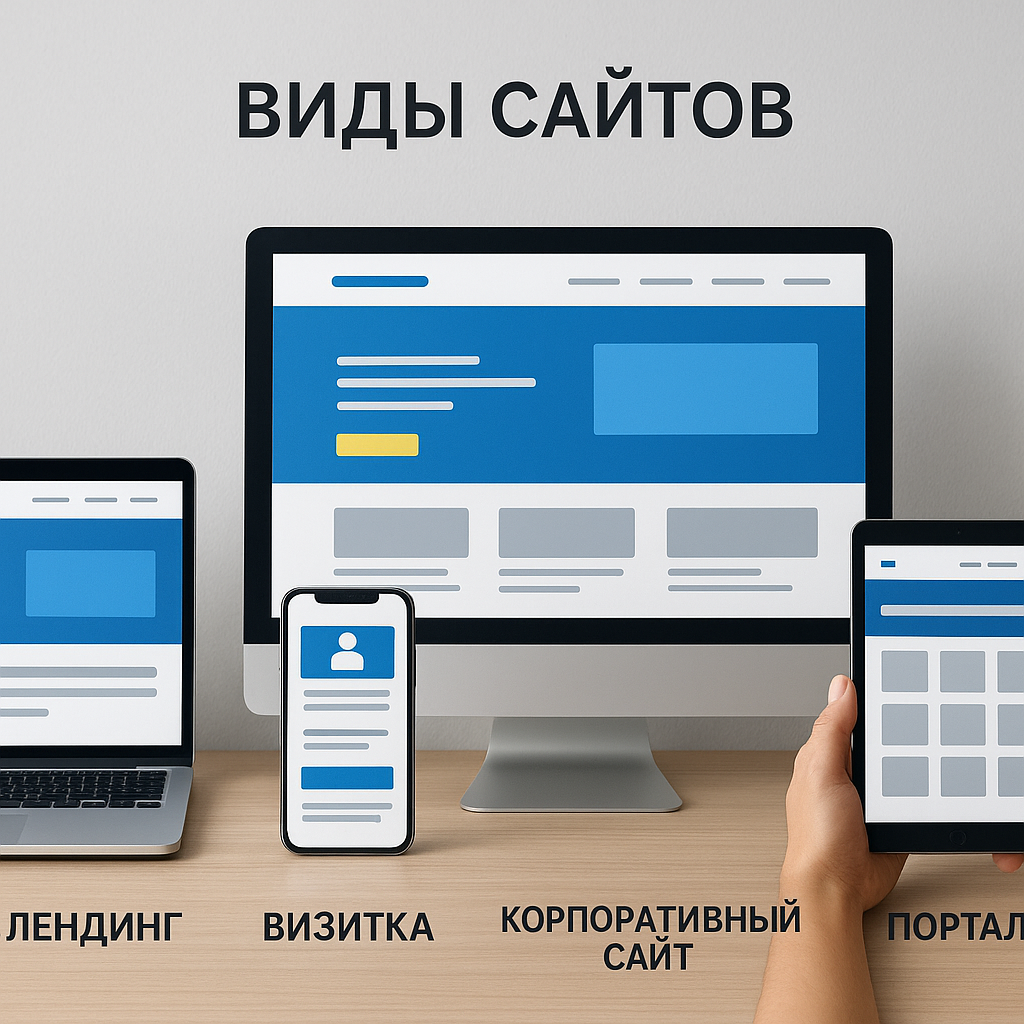
Online store and marketplace: what is an online store, what is a marketplace, and how are they different in terms of economics and promotion?
What is an online store and what is a marketplace? The difference isn't in design, but in economics.
In practical terms, an online store is when you have your own catalog, your own warehouse/supplies, and you control the price, receipt, and margin. A marketplace is a platform where many sellers sell, and you manage the rules of the game: commissions, moderation, logistics scenarios, ratings, and disputes. In the classification types of websites These are two different “weight categories” in terms of complexity and timeframe.
For a store, the key question is how to consistently attract traffic that converts and increase LTV. For a marketplace, it's how to build a two-sided marketplace: attracting both buyers and sellers, maintaining quality, and avoiding becoming bogged down in operational complexity.
What you need for promotion: SEO structure, filters, cards, and integrations
In an online store, effective SEO almost always depends on the architecture: categories, subcategories, filters, and product pages. If this is done haphazardly, Google sees duplicates, users see chaos, and the business sees expensive leads.
Critical elements we include in the strategy:
- logical catalog structure according to demand (semantics → categories);
- SEO filter settings (to avoid creating junk pages and killing indexing);
- Product card: photo, availability, delivery/payment in Ukraine, specifications, reviews, micro-markup;
- Integrations: CRM, warehouse/ERP, payments, delivery services, advertising feeds.
The marketplace adds another layer: seller accounts, card moderation, anti-fraud, unified attributes, search across millions of SKUs, and commission rules. This is no longer a "make a website" approach, but product development.
How to choose a format for the Ukrainian market and calculate a realistic return on investment
Choose an online store if you have control over your product range, logistics, and margins, and are willing to invest in systematic website promotion: content, categories, discreet link building, and analytics. A marketplace makes sense when you can attract a sufficient number of sellers, ensure quality and service, and the model has unit economics (commissions, returns, support, marketing).
Realistically, a store can break even faster because you monetize every order directly. A marketplace typically takes longer to get up and running—you need to build liquidity on both sides. If you don't have the resources for product, support, and marketing, it's better to start with a store and leave the marketplace for the digital growth phase of your business, once demand and operational maturity are established.
Portal: What is a portal and why is it almost always a "product" and not just a website?
What is a portal? When a website becomes a service with roles and logic
A portal is a type of website that's almost always closer to a product than a "website with pages." It features personal accounts, user roles (client, manager, partner, admin), complex scenarios (requests, statuses, documents), search, notifications, and sometimes billing and an API.
If a corporate website answers the question "why should I trust you?" then a portal answers the question "how can I regularly solve problems here?" And yes, this means not only launching it, but also maintaining, developing, measuring, and improving it. Otherwise, it turns into expensive digital furniture.
"A portal isn't something we just built and forgot about. A portal is something we built and then started working for real."
Why Portal Development Is More Complex (and Where the Costs Are Usually Hidden)
The portal's complexity lies in the number of "invisible" components: data architecture, access rights, security, workload, integrations, and UX for different roles. In the Ukrainian market, nuances are often added: multi-currency support, different delivery/payment methods, CRM integrations, document flow, personal data, and stability requirements.
To put it simply, the portal needs:
- product scenarios (user flows) and feature prioritization are strategy, not chaos;
- technical core: authorization, roles, logging, backups;
- integrations (CRM/ERP, mail, SMS, payments, analytics);
- Regular support: bug fixes, updates, security, development.
The most common mistake is to view a portal as a "big corporate event." Then the "Can we add more..." series begins, and the budget suddenly becomes substantial.
"If a project has roles, statuses, and integrations, it's no longer a website. It's a product with a roadmap."
How Portals Grow Organic Traffic (and Why Without a Strategy, Chaos Will Happen)
Paradox: a portal can generate significant organic traffic growth, but only if the public portion is designed with SEO in mind. Typically, these include content sections, a help/knowledge base, a catalog of services/facilities, category pages, and a search function (e.g., companies, vacancies, properties, articles).
To ensure sustainable improvement in Google visibility, you need clean indexing (without junk parameters), canonicals/robots, proper pagination, speed, microdata, internal linking, and content that drives sales (or registrations)—that is, helps the user solve a problem.
Without a strategy, everything falls apart: content is published "as is," search engines index duplicates, filters create thousands of empty pages, and then the team heroically "fixes the SEO." Heroism is a bad business model; systematic website promotion is better.
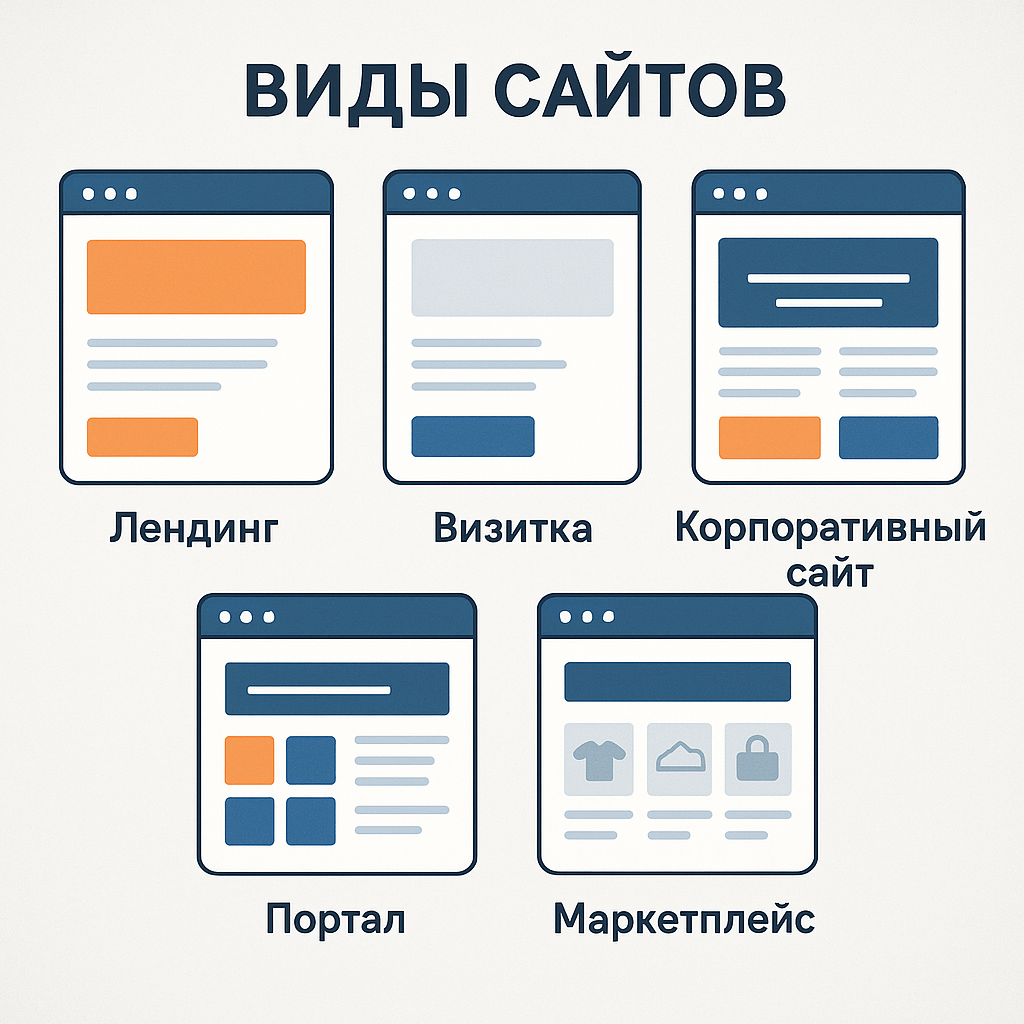
FAQ: Short answers to frequently asked questions about website types (selection, timeframes, SEO, budget, scaling)
What type of website should I choose for advertising and SEO?
For advertising (Google Ads/Meta), it's usually more logical to start with a landing page or a compact corporate website: it's easier to focus the offer and attract traffic that converts. For business SEO, a corporate website or online store almost always wins because they require structure: landing pages for keywords, content sections, categories, and internal linking. If you're aiming for systematic website promotion, keep in mind: SEO prefers architecture and consistency, not a "one-page-at-a-glance" approach.
Is it possible to start with a landing page and then grow into a corporate event/store?
Yes, and this is a reasonable strategy, as long as you don't get yourself into a dead end from the start. At Web-Raketa, we often do this: launch a landing page to test the offer, collect demand and conversion statistics, and then transfer the results (structure, concepts, customer questions) to the corporate website or catalog. It's important to plan for growth: domain, analytics, proper goals, a clear URL structure, so that the migration doesn't turn into a "moving over the balcony with the couch."
What's important to Google, and what mistakes are killing conversions?
Google prioritizes technical correctness (speed, mobility, indexability), structure quality, and content that truly answers the search query. For businesses, something else is more important: that visitors understand the offer, trust it, and can take action without obstacles. The most common mistakes we see from entrepreneurs in Ukraine are: lack of specific terms (prices/ranges, deadlines, geography, delivery/payment), forms without explanation of "what will happen next," weak evidence (case studies, reviews, process guarantees), overloaded pages, and "design for design's sake." Another classic: the website is built, but the analytics aren't configured—then the debate turns to taste, not numbers.
| Question | A practical answer |
|---|---|
| How long does it take to launch? | A landing page is faster, while a corporate event/store takes longer due to its structure, content, and integrations. Plan ahead for materials preparation and approval. |
| What is a "normal" budget? | It depends on the tasks and risks. The cheapest cost is chaos if you consider only the "website," and the most expensive if you consider rework and lost traffic. |
| Which types of websites easier to scale? | Corporate websites, stores, and portals scale based on structure and content; landing pages are limited in their scope, unless they're reduced to a mere sheet. |
Bottom line: how to choose your website type and avoid overpaying for a "spaceship" if you need a working tool
To put it all together, a website isn't just "pretty blocks," but a working model for marketing and sales. Therefore, website types should be chosen not based on "the same as your competitor," but based on the goal and traffic channel. A landing page is most powerful when you need to quickly test an offer and convert paid traffic into leads. A business card is useful as a basic presence and credibility, but without meaning and structure, it easily turns into a digital sign. A corporate website is a systemic platform for SEO for a business: services, landing pages, case studies, a blog, and content that drives sales. An online store sells your product range and margins, while a marketplace is a separate product economy with multiple sellers, rules, and commissions. A portal is almost always a product: roles, accounts, scenarios, search, and ongoing support.
To avoid overpaying for a "spaceship" when you need a reliable tool, start with simple criteria: what is the goal (leads, sales, registrations), where will the traffic come from (SEO, advertising, brand), what volume of content and structure is needed to meet demand, who will support the project (in-house or a contractor), what budget and timeframe are realistically comfortable, and how will you measure the results (conversion, cost per lead, organic traffic growth).
At Web-Raketa, we adhere to the principle of "strategy, not chaos": first, the goal and funnel, then the structure and content, and only then the design. This results in a transparent approach to promotion and systematic website promotion, which leads to increased visibility in Google and long-term digital business growth—without promising miracles, but with manageable results.




 Russian
  English
  Ukrainian
  German